

Most construction sites are defined by noise, mud, scaffolding, and a fair share of organized chaos. But a new initiative involving Foster + Partners is proposing something that looks less like a traditional build and more like a high-stakes kinetic ballet.
Backed by a €4 million research grant, a consortium of roboticists and architects is developing SWIFT-BUILD (Swarm-based Inverted Fabrication for Timber Buildings). The concept upends conventional structural logic by assembling buildings upside down, starting from the top floor down.
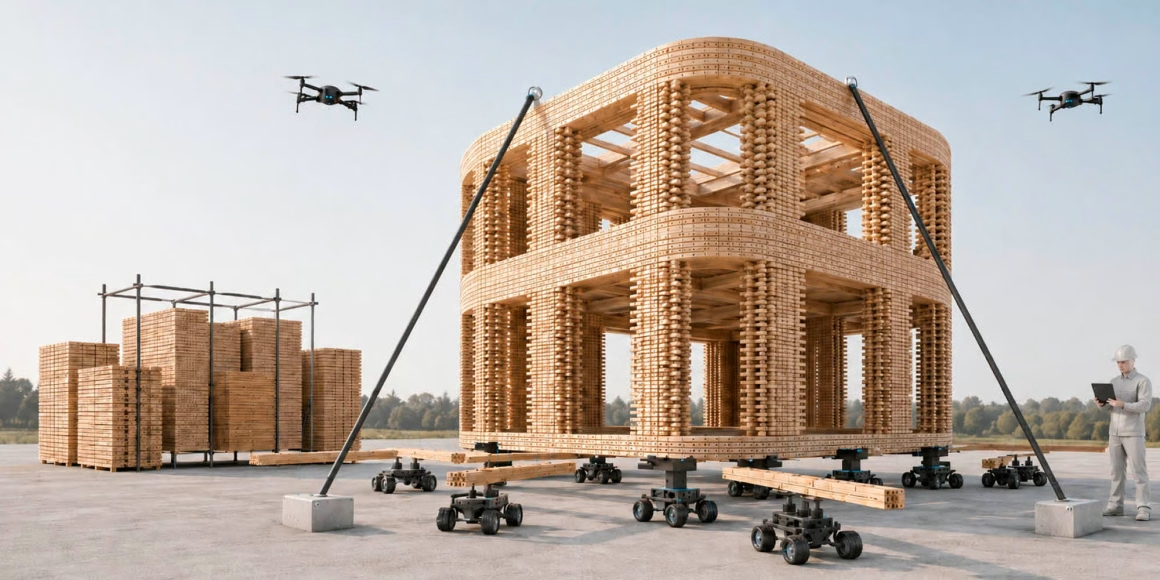
Instead of hoisting heavy materials dozens of feet into the air, ground-based robotic units piece together the modular timber roof at waist level. Once complete, synchronized hydraulic jacks lift the entire assembly into the sky, making just enough clearance for the robotic swarm to slip in underneath and build the floor below it.
Overhead, autonomous drones buzz along the perimeter, scanning alignments and feeding telemetry back into the collective hive mind. The architecture essentially emerges from the earth, layer by layer, fully formed.
It is an undeniably seductive vision: low-carbon mass timber, zero scaffolding, whisper-quiet autonomous assembly, and modular joints designed to be unbolted and recycled decades later without leaving a trace of rubble behind.


Yet, watching heavy timbers rise suspended in mid-air invites a quiet, nervous fascination. What happens when we trust an autonomous swarm with thousands of pounds of suspended mass?

Coordinated swarm intelligence works beautifully in controlled labs, but unpredictable wind gusts, uneven ground, or a fraction-of-a-millimeter drift between synchronized lifting jacks could turn an elegant mechanical dance into a sudden catastrophe.
If one jack hesitates while another pushes upward, how does the collective system react?
Can algorithmic feedback loops truly replicate the gut instincts of veteran site crews who know how structural materials groan under stress?

The consortium plans to answer these questions directly over the next three years, culminating in a full-scale pavilion built entirely by the autonomous swarm.
It’s a daring gamble on the future of building, balancing architectural art right on the razor’s edge of mechanical precision.


