

Quick Facts: Artist: Charles Schridde. Client: Motorola. Era: 1950s and 1960s. Medium: Editorial illustration for print advertisements. Subject: Visions of domestic life in a technologically advanced future. Why they matter: They captured a cultural moment of genuine optimism, and many predictions were surprisingly close.

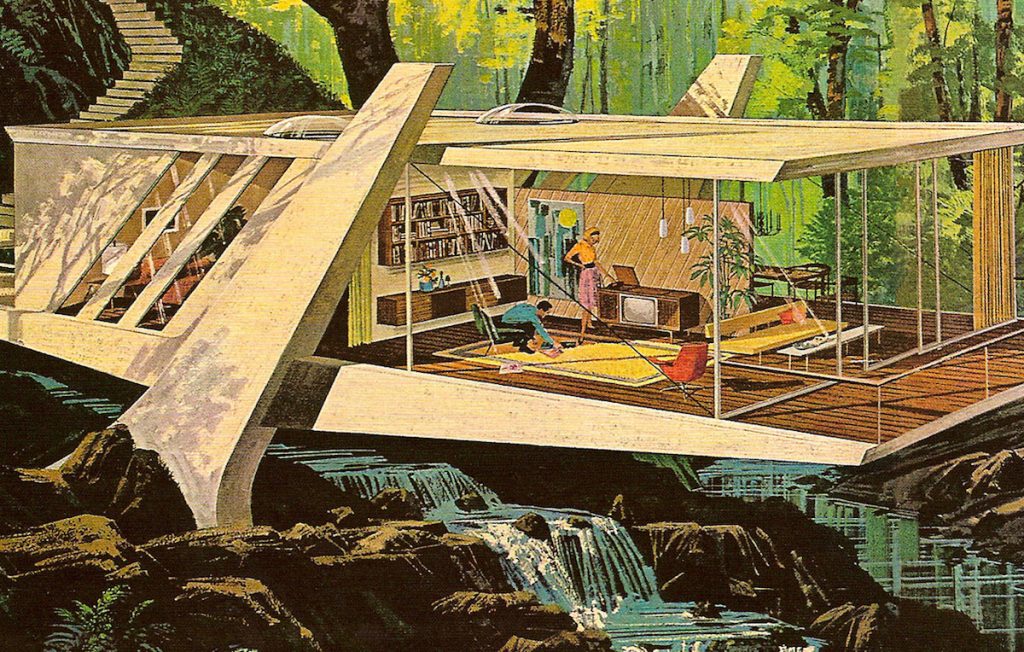
In the 1950s and 60s, Motorola hired illustrator Charles Schridde to paint the future. Not science fiction. Not spaceships. The future of the living room, the kitchen, the den. Domestic life with technology woven in so naturally it felt inevitable. Looking at these images now, what’s striking is how much he got right.

Who Was Charles Schridde?
Schridde was a commercial illustrator working in the postwar American tradition of aspirational advertising art. His Motorola commissions gave him a specific and unusual brief: paint how families will actually live with electronics in the home of tomorrow. The results were less about gadgets and more about atmosphere: open-plan rooms, integrated screens, a confident sense that modern design and modern technology belonged together.


What He Got Right
The screens embedded in walls. The centrality of audio and visual media in every room. The open, flowing domestic architecture that treats technology as furniture rather than novelty. These weren’t wild guesses. They were extrapolations from genuine trends, drawn with enough craft that they still feel coherent today.


What He Got Wonderfully Wrong
The clothes. The formality. Families hosting cocktail parties around their new television sets. Men in suits watching the news in rooms that look like they were designed by Mies van der Rohe. The social dynamics are pure 1950s, even as the technology reaches toward something much later. That contrast is exactly what makes these illustrations so worth studying.


Why These Images Still Matter
Every era imagines its future through the lens of its present. Schridde’s illustrations are a perfect record of mid-century optimism: the belief that better technology would lead to better living, that design and domesticity were partners in building something genuinely good. Even 70 years on, that spirit is hard not to find moving.


The same optimism was being built in steel and neon at the same time, on coffee shops and gas stations across Los Angeles. If Schridde painted the living room of tomorrow, Googie put its roofline on the roadside; see our complete guide to Googie architecture for the buildings that made the future something you could park in front of.
Featured in Retrofuturism: The Future We Were Promised, our visual guide to the tomorrows the past imagined.


