

Artist Maya Barkai collects the little people who tell us when to cross the street. The idea came to her shortly after she moved to New York in 2002, just as the city was swapping its old lettered “Walk” signals for glowing figures. She started asking people everywhere to photograph their own, and the pictures poured in.
The result is Walking Men Worldwide, a crowdsourced field guide to a figure most of us look at a dozen times a day and never really see.
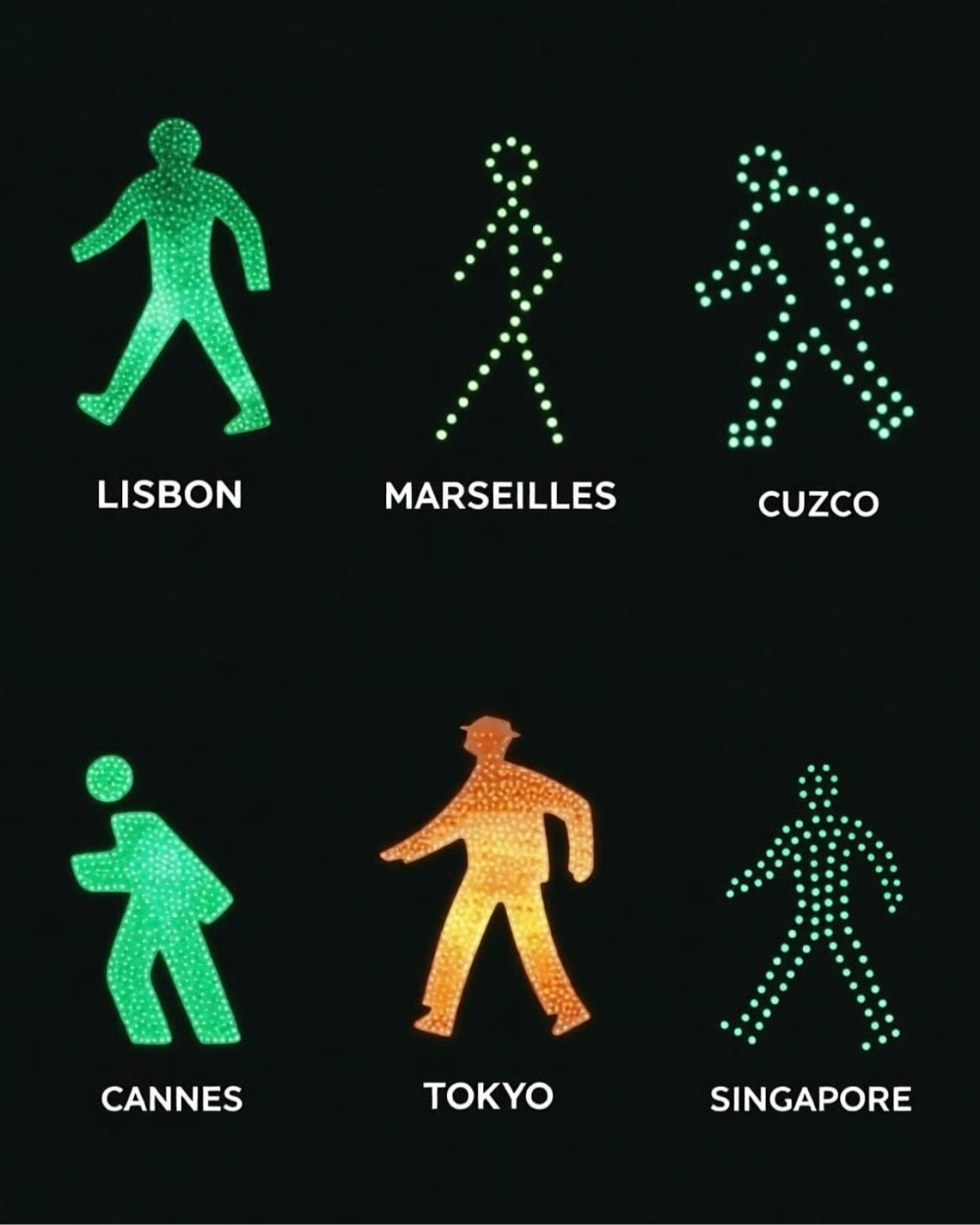
From Warsaw to Singapore to Cape Town, Andorra and Sydney, the differences are what make it. Some are solid and stocky, some are a constellation of dots, and some just look like they’re in more of a hurry. The orange Tokyo walker in the set above even seems to be wearing a hat.
Five hundred feet of walking men
One of the collection’s first big outings came in January 2010: Walking Men 99: 99 walk signals from cities around the world, printed along roughly 500 feet of plywood construction fence at 99 Church Street in Lower Manhattan. The Downtown Alliance commissioned it to brighten a stalled building site. In 2011 she swapped in 24 new cities, including Mumbai, Minsk, Lima and Rio, and retired a few others.
There were walkers on bicycles and in wheelchairs, figures in broad-brimmed hats, and a London green man on horseback. Her own favorite was Antwerp’s, a man and a woman walking together. “The great thing about it is that the woman is leading the man,” she told DNAinfo.
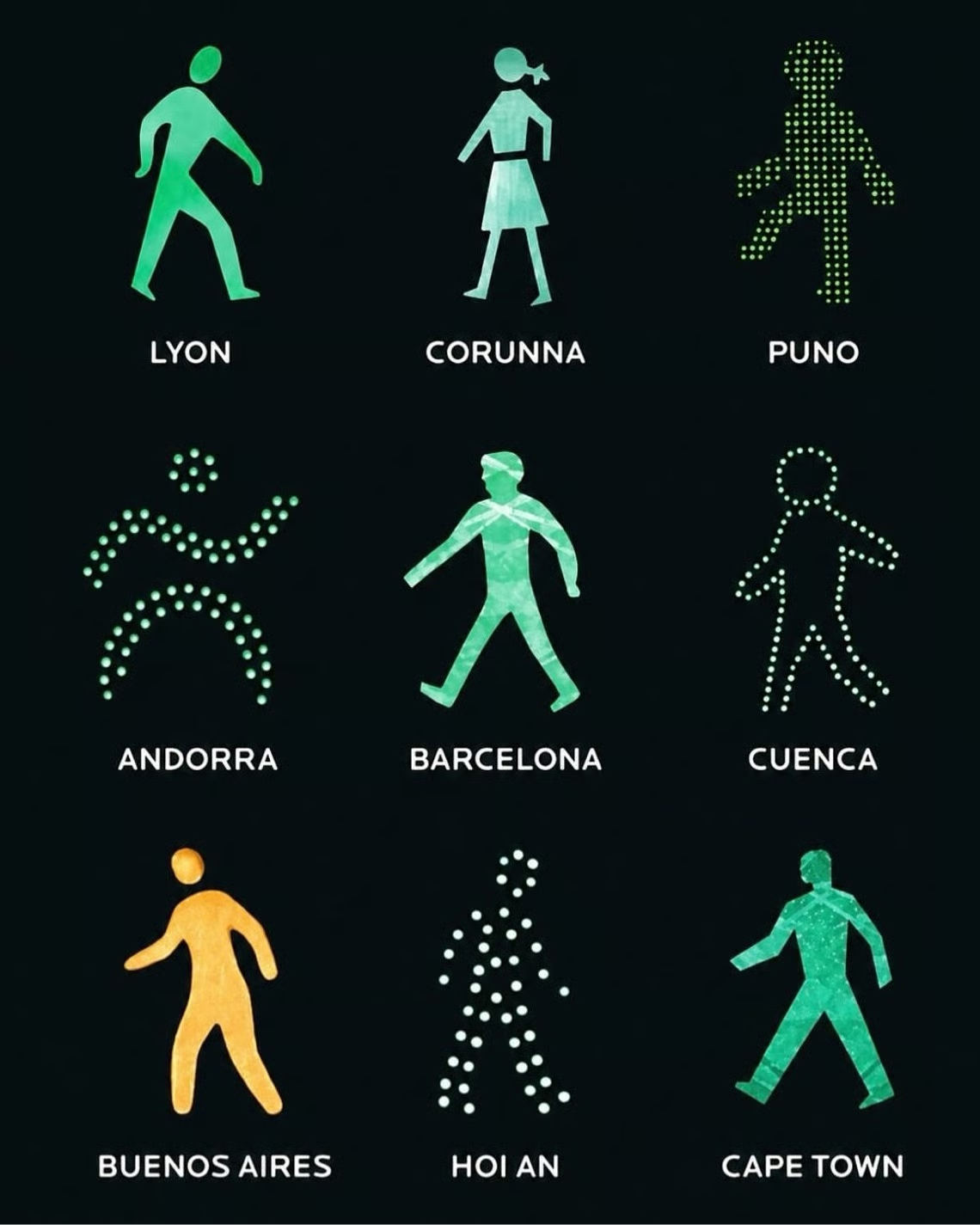
The project kept walking. Nearly 150 figures wrapped the World Trade Center construction site in a piece called Men at Work, unveiled on September 11, 2011. Sydney hung banners of them through the city in 2013. And if you own Lee Ranaldo’s 2012 album Between the Times and the Tides, you’ve already got a Walking Men cover on your shelf.
So we built our own. Push the button below!
Go on. Push the button.
Crossings so far: 0
How the little man got the job
The first traffic signal went up in London in December 1868, near Westminster Bridge. It used railway-style semaphore arms by day and red and green gas lamps at night, and a policeman worked it by hand. In 1869 a gas leak made one of its lamps explode, badly injuring that policeman, and the signal was taken down.
Pedestrians got their own signals in the 1920s, and Baltimore installed the first push button in 1929. For decades American signals spelled it out, first “Walk” and “Wait,” then “Walk” and “Don’t Walk” from 1948. Symbols were approved in 1978, and today every new signal in the US has to use a white walking person and an orange raised hand.

Much of the rest of the world follows the 1968 Vienna Convention on Road Signs and Signals, which recommends a red standing figure on top and a green walking figure below, with flashing green meaning time is nearly up. The United States and Japan never signed on. In Japan the go light is officially called ao, blue, reportedly because Japanese didn’t sharply separate blue and green when the first signals arrived.
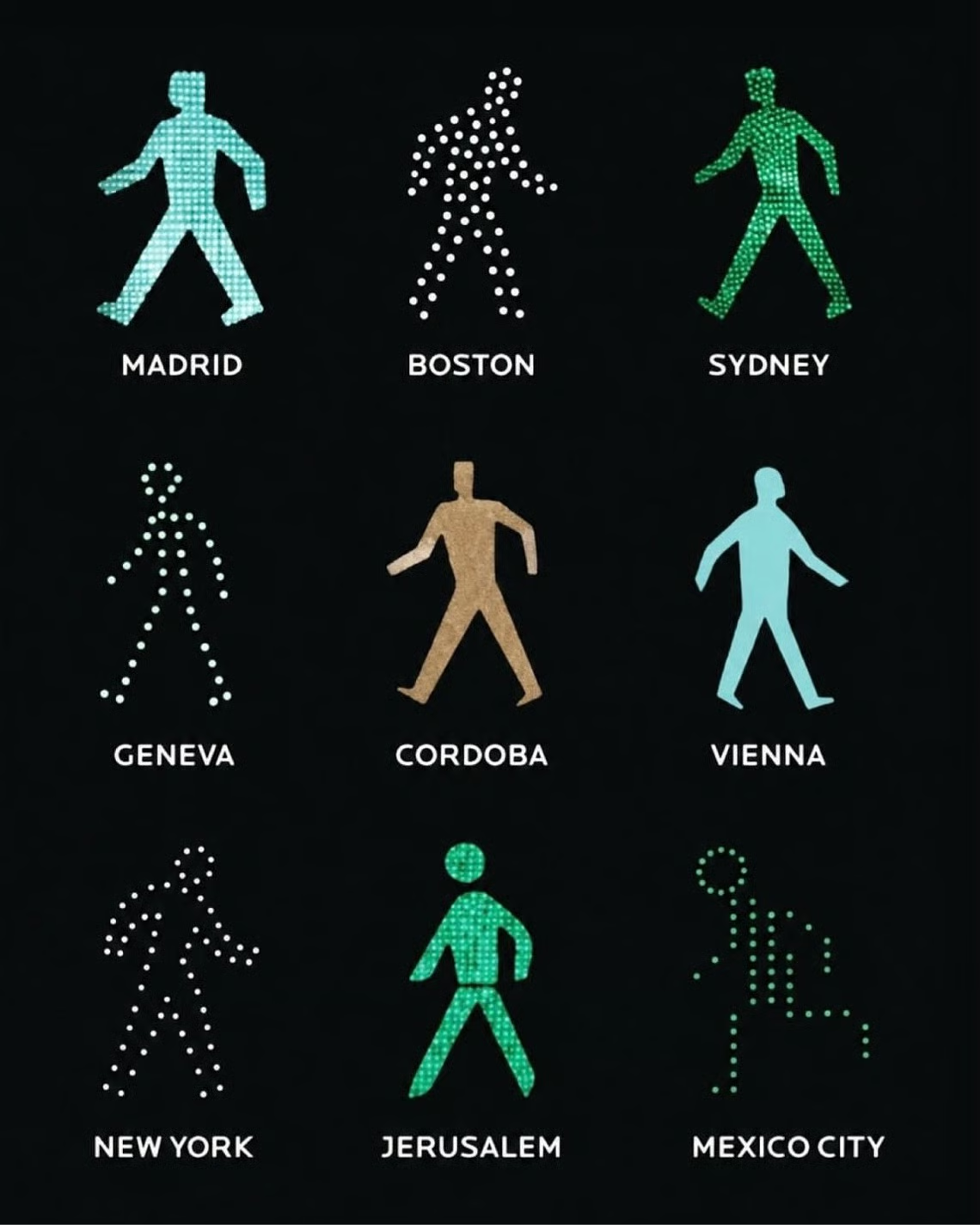

Signals with a local accent
A few cities have gone further and turned the little man into a local celebrity. Here are our favorites.


Berlin’s Ampelmännchen nearly vanished after reunification, when East German signals were being replaced. A protest campaign in the 1990s, a designer who made lamps from the old lenses and a book about the figure brought him back, and today he’s on signals and souvenirs across the city. In Amersfoort, in the Netherlands, a council prank in 2000 slipped a woman named Sophie onto the signals overnight. And in Lisbon in 2014, a car brand wired up a booth where passersby could dance, while the red figure on the signal across the street danced along with them in real time.
For fellow sign spotters
Two small things for anyone who now checks the crossing signal in every city they visit.
 Human, White Jean Jacket Pin
Aaron Draplin's pictogram person in green hard enamel, drawn in the same plain visual language as the signals above. Picked up by hand from his Portland studio.
$9
 Sold out
Accidentally Wes Anderson Postcards
Twenty-six real places around the world that look art directed, from Wally Koval's Accidentally Wes Anderson project. The same pleasure as this series, sized for a mailbox.
$16.99
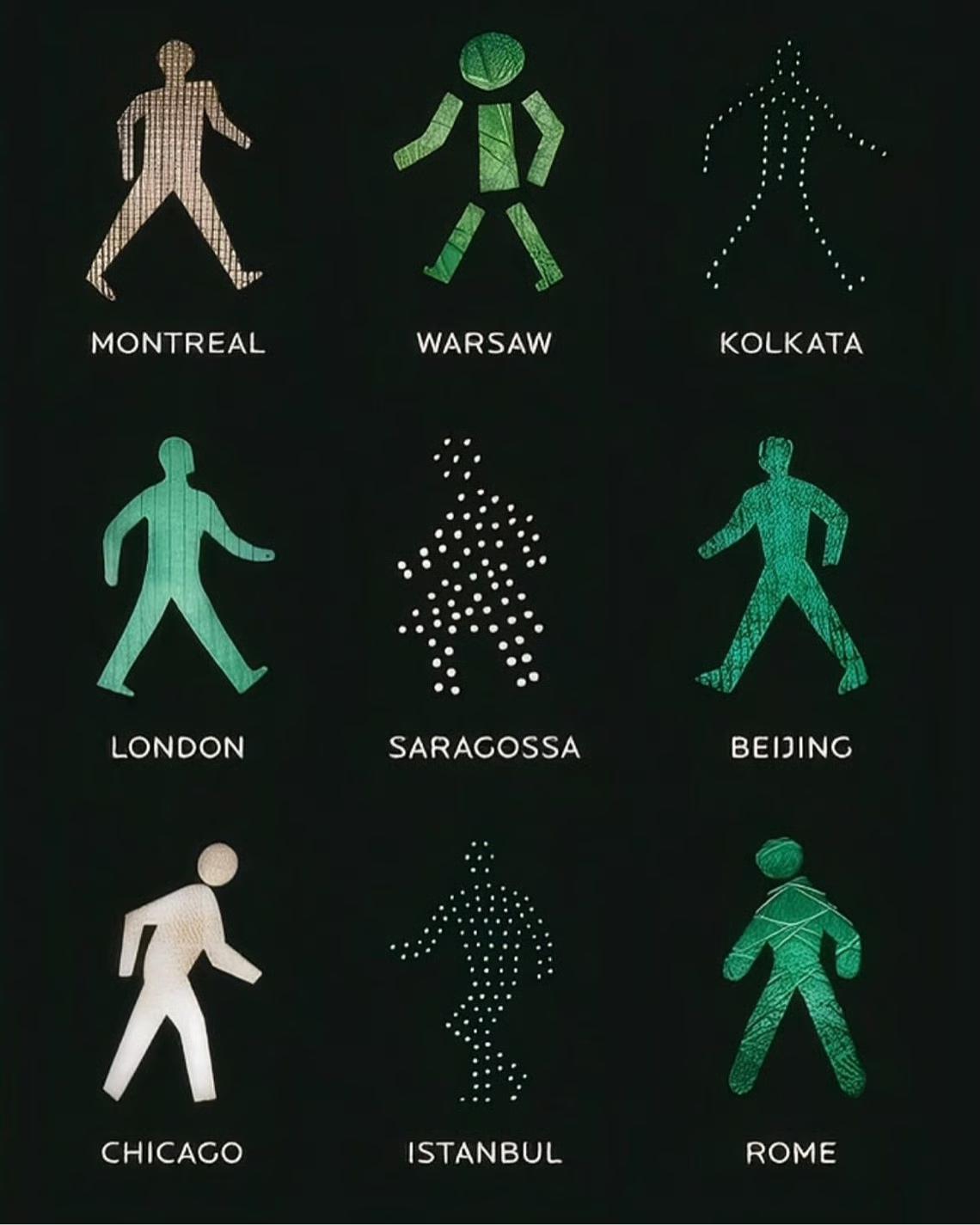
Pictograms like these are a whole design language of their own. Our guide to iconic design covers the people who drew the world’s signs, and our history of Olympic logos shows where a lot of that thinking went.

Maya Barkai sells Walking Men Worldwide posters and more on her website. Next time you’re waiting at a crossing in a new city, take a picture for her!

Via Kottke. Walking Men images © Maya Barkai. Sources: the Downtown Alliance; DNAinfo; the University of Vermont and the MUTCD on American signals; the 1968 Vienna Convention; the City of Vienna; and Amelia Tait’s history of the little green man.


