

There is a voice most of us associate with the first time we truly saw the natural world. Not just glimpsed it through a car window or a classroom slideshow, but felt it for real.
The weight of it. The strangeness. The astonishing, improbable fact of it all.
That voice belongs to Sir David Attenborough, and today, it turns 100.
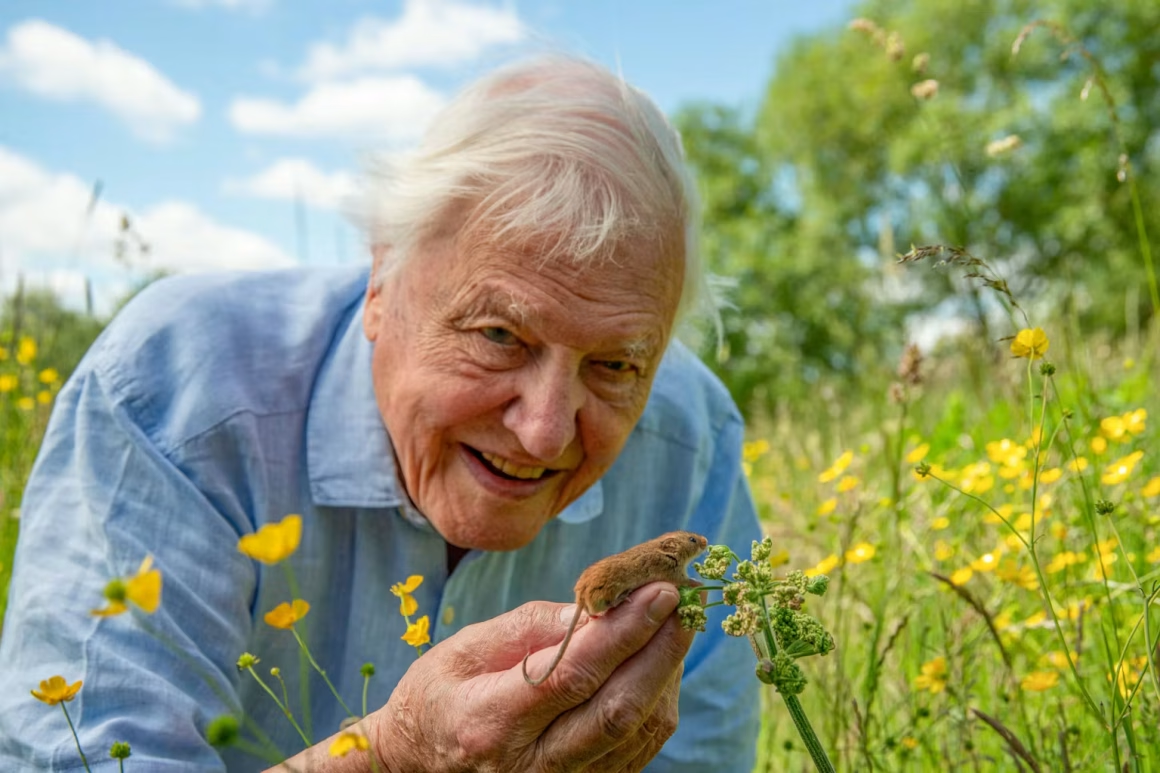
Born on May 8, 1926, in London, Attenborough has lived longer than almost any institution he has documented.
He has watched coral reefs bleach and recover and bleach again. He has filmed species that no longer exist. He has stood at the poles and watched the ice retreat.

And through all of it, he has continued to show up, camera crews in tow, with the curiosity of a child and the patience of someone who has learned that awe is a more powerful teacher than fear.
His brother, Richard Attenborough, also made a huge name for himself, becoming a star of movies, and a director as well.
A Career Built on Wonder
Attenborough joined the BBC in 1952, at a moment when television was still a novelty and the natural world was largely unexplored territory for broadcast.
What followed was one of the most remarkable careers in the history of media.

Life on Earth in 1979 set a new standard for nature filmmaking, reaching an estimated 500 million viewers worldwide and reframing the documentary as something cinematic, urgent, philosophical.

It was the beginning of a beautifully told franchise of understanding.

The Blue Planet, Planet Earth, Our Planet, A Perfect Planet — each series pushed the technology further and, more importantly, pushed audiences closer to a truth that scientists had been documenting for decades: the natural world is not a backdrop to human life.
It is the condition of it.

What makes Attenborough singular is never just the footage, it’s the framing. He understands that people do not protect what they do not love, and that people cannot love what they have never truly seen.
So he shows them. Baby elephants. Mantis shrimp. The synchronized ballet of starling murmurations. He makes the planet legible, and then he makes it feel fragile, and then he makes it feel worth fighting for.

The Weight He Chose to Carry
For most of his career, Attenborough was careful to let the images speak. He trusted the audience to draw their own conclusions.
But as the evidence of climate change became undeniable and the window for meaningful action began to narrow, something shifted.

In his 2020 film A Life on Our Planet, he called it his “witness statement”, a personal reckoning with everything he had seen change in nearly a century. It was not a lecture. It was not a polemic. It was a man standing honestly in front of the camera and saying: I have watched this happen, and I believe we can still change the ending.
He has since addressed the United Nations. He testified at COP26. He has stood alongside world leaders and spoken plainly about what the science demands. For someone who spent decades deliberately staying outside the political frame, it was a profound act of commitment. He decided, at an age when most people have stopped deciding anything, that the stakes were too high for neutrality.

What He Gave Us
There is a generation of biologists, conservationists, climate scientists, and environmental activists who will tell you that Attenborough is the reason they do what they do.
Not a textbook, not a professor. A voice on a television screen describing the life of a humpback whale with such precise and unguarded reverence that something clicked into place.

That is a rare kind of influence. It does not work through argument or data or policy. It works through feeling. Through the sudden, unexpected sense that the world is more astonishing than you realized, and that this astonishment comes with responsibility.
We talk a lot about content in this space. About images that stop you. About the kind of beauty that makes you pay closer attention to the world. Attenborough built a life around exactly that instinct, and applied it to every ecosystem on the planet, and kept doing it for a hundred years.
One Hundred Years
The milestone itself almost defies comprehension. He was born three years before the Great Depression. He was a teenager during World War II. He made his first nature broadcast before color television existed. He made his last major film series in his late nineties.

He has said, with characteristic understatement, that he hopes he has been “useful.” The word lands quietly, the way Attenborough’s words always do. Useful. As if he merely helped a few people find their coat. As if he did not spend a century teaching the world to grieve and marvel at the same time, and to understand that the two feelings are, ultimately, the same.
Happy 100th, Sir David. We have been paying better attention because of you.

Discover more from Moss and Fog
Subscribe to get the latest posts sent to your email.


2 Comments
Great homage to him. Very special! Love hearing his voice. ❤️🧡💛
A very amazing man