

A New Moon? Sort of. Meet Earth’s Quasi-Companion
Every now and then, something small and strange drifts into Earth’s orbit and makes astronomers do a double-take. The latest guest is 2025 PN7, a tiny asteroid that behaves a little like a second moon.
But before we start printing “Two Moon Club” T-shirts, let’s set expectations.
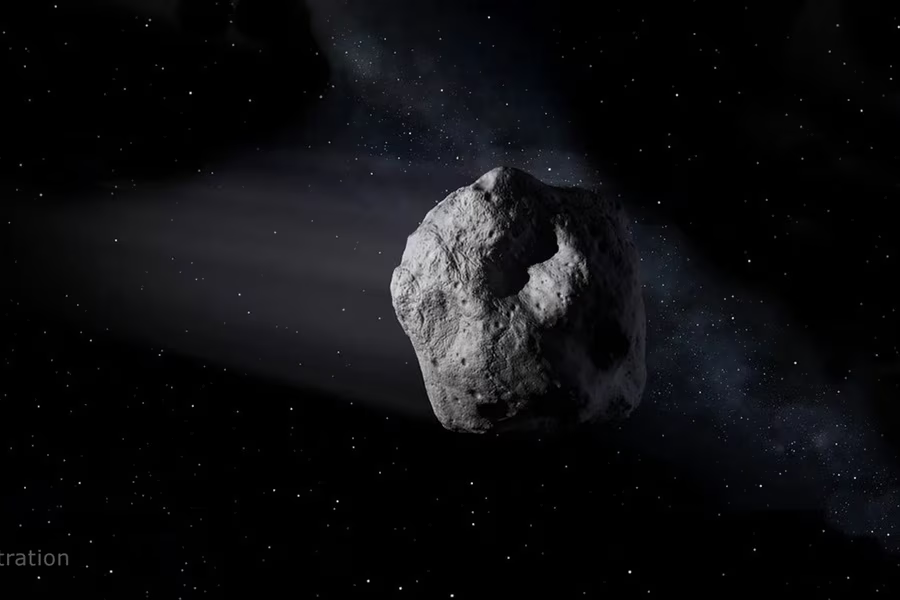
2025 PN7 isn’t actually orbiting Earth the way our real moon does. Instead, it travels around the Sun, just like we do.
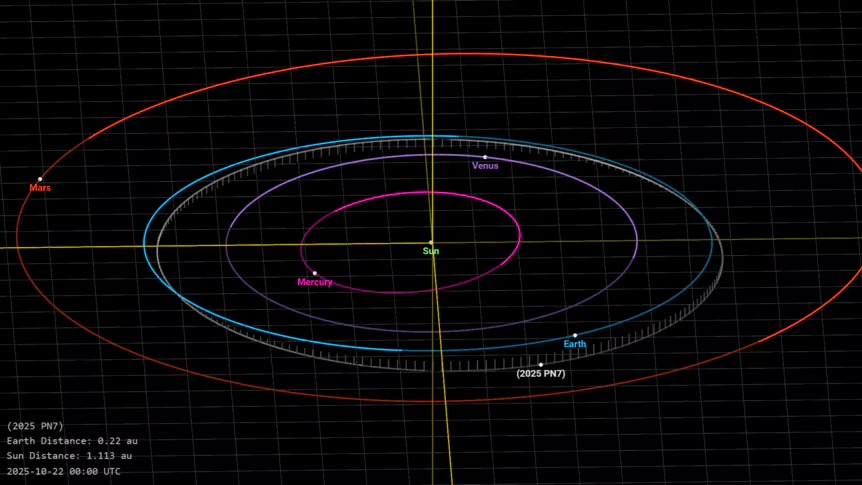
But it moves in sync with our orbit, almost like it’s jogging alongside us.
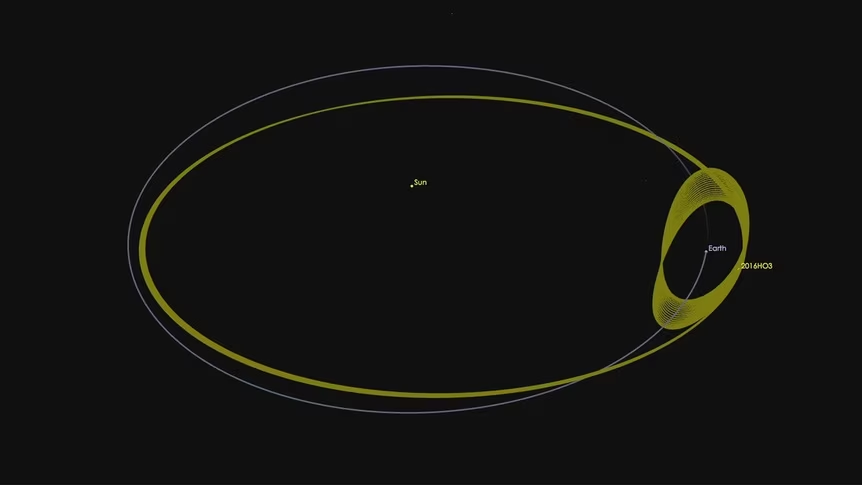
That’s what makes it a quasi-moon. Not quite a moon, not quite a random space rock drifting by.
More like a cosmic companion keeping pace.

It’s also not so big.
- It’s small — somewhere between the size of a house and a small building.
- It gets as close as 2.5 million miles away, which is much farther than our real moon.
- It will likely stick around until about 2083, keeping us company for a few decades.
So no, we’re not suddenly a two-moon planet. But we do have a quiet little space buddy looping along with us. It’s a reminder that our solar system isn’t static.
It’s full of tiny travelers, drifting, orbiting, and sometimes tagging along for the ride.

A second moon? Not exactly.
A delightful cosmic sidekick? Absolutely.


3 Comments
Why doesn’t NASA send a probe and have it attach itself to this thing a see where it goes. Same with Alpha whatever.
Looks like a big rock
Ok, I learned a lot. Good to know.