

The value of hotspot sharing becomes obvious only when you are already on the move.
Most travelers think about data in terms of maps, messages, and social media. The real challenge appears when one phone is suddenly expected to support a laptop, a tablet, or another person’s device too. That happens more often than people expect.

You may need to upload work files from a train station, share internet with a travel companion at the airport, or connect your tablet during a long layover.
In those moments, hotspot sharing stops being a nice extra and becomes one of the most useful parts of your setup. That is where a flexible travel eSIM starts to matter.

Why limited hotspot plans feel frustrating in real travel situations
A lot of mobile plans advertise generous data, but quietly restrict hotspot use. Some slow the speed, some cap sharing, and some charge more later. That makes travelers second-guess every connection. A better setup lets you share data freely without turning it into a separate decision each time. For people who carry multiple devices or travel with family, that freedom matters more than a flashy data number on a plan page.
A strong travel setup should support your whole trip, not just your phone
Travel runs on more than one screen now. Boarding passes, hotel emails, translation tools, video calls, train tickets, and cloud files all compete for access.
A dependable travel eSIM should handle that naturally. It should let one connection support the trip as it happens, without forcing you to hunt for café WiFi or ration your usage every few hours. That is also why many people judge the best eSIM for international travel by how practical it feels, not just by price.
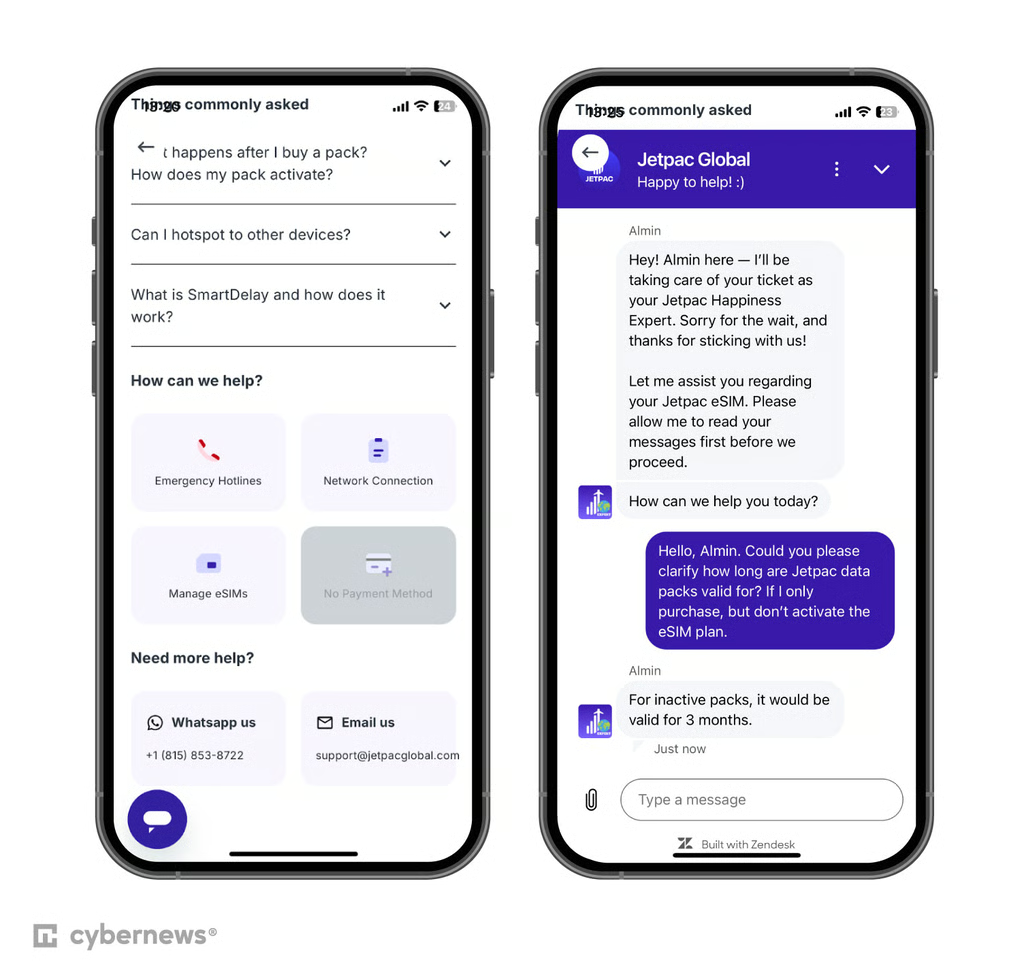
How Jetpac makes hotspot sharing feel simple instead of risky
A Jetpac eSIM allows hotspot sharing without data limits, which means your phone can power your laptop, tablet, or a second traveler’s device without extra friction. That alone makes it useful for remote workers, families, and anyone juggling multiple screens on the road.
Jetpac also works across 200+ destinations, connects through multiple networks for steadier service, and keeps pricing upfront so there are no surprise roaming bills.
Travelers can save up to 70% compared with traditional roaming.
The rest of the experience supports that same convenience. Maps, chat, and ride-booking access can remain available after the main data pack is used.
In-app calls start at $1.99 for five minutes, support is available 24/7, and eligible flight delays can unlock lounge access if registered in advance. That combination is what makes Jetpac feel genuinely useful, not just technically impressive.


