
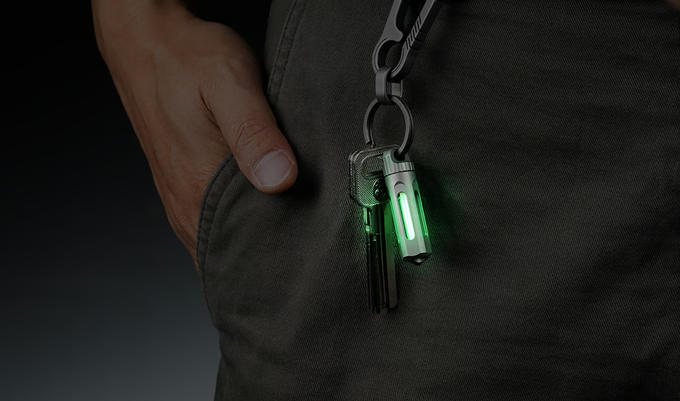

Every so often an object comes along that solves a problem you never bothered to name. Ours went something like this: it is dark, the keys are somewhere in the bag, and the phone is in the other hand. The NoxTi, a keychain the size of a AA battery machined from solid titanium, answers that moment with a soft, permanent glow. No battery, no switch, no charging cable. It simply glows, and it will keep glowing for roughly twenty-five years.
It comes from Xedge, a small hardware outfit that has spent the past couple of years shipping titanium everyday-carry pieces through Kickstarter.
Their latest campaign asked for HK$10,000 and closed in April with a little over HK$3 million pledged, roughly US$385,000, from more than 5,000 backers. That is a lot of people agreeing that a glowing key fob is a nice thing to own, and having spent some time with the design, we understand why.
Light from physics, not power
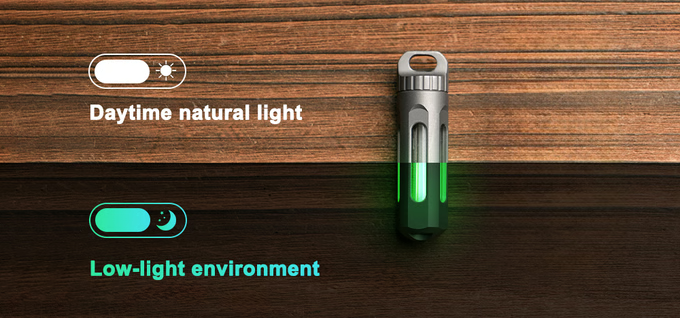
The glow comes from a tiny sealed vial of tritium, a hydrogen isotope that slowly decays and, in doing so, excites a phosphor coating on the inside of the glass. The result is the same steady light that has lived on the hands of dive watches and the sights of survey instruments for decades. Tritium has a half-life of a little over twelve years, so the vial is noticeably dimmer by year twenty-five, but it is still glowing, and it never once needed anything from you.
The obvious question is safety, and Xedge addresses it plainly. Tritium emits only beta particles, which cannot get through a sheet of paper, let alone a quartz tube. If the glass were ever to break, the gas dissipates almost instantly. It is the same reasoning that has kept tritium on wristwatches and exit signs for generations, and it is why the NoxTi can live in a pocket without a second thought.
A tube of light suspended in titanium
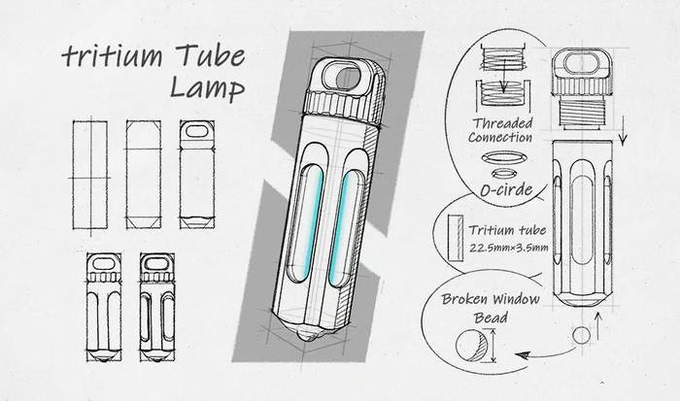
What makes the NoxTi feel like a designed object rather than a novelty is the way the body is built around the light. The vial sits inside a precision quartz glass sleeve with 92 percent light transmission, chosen because it will not yellow or scratch the way acrylic does. That sleeve is held by two small silicone O-rings inside a fully enclosed shell of Grade 5 titanium, the aerospace alloy used for jet components and medical implants. The O-rings keep the tube perfectly centered, so from any angle the light appears to float in the metal.
The whole thing measures 45 by 12 millimeters and weighs under eleven grams. It has been tested from minus 20 to 50 degrees Celsius, and the campaign makes a point of showing it pulled from a freezer and dropped into hot water, still glowing. The pointed end doubles as an emergency glass breaker, which is the kind of detail that feels more like a courtesy than a gimmick on something you will carry every day.
Swap the vial, change the mood
Our favorite decision in the design is that nothing is glued. There is no epoxy and no permanent seal. You push the tube out with a fingertip and slide a new one in, which means the titanium shell can outlive several vials and several moods.
Tritium comes in six colors: ice blue, apple green, red, sunset orange, violet, and ocean blue. There is also a less expensive luminous tube option that charges from ambient light and glows through the night, for anyone who wants the object without the isotope.

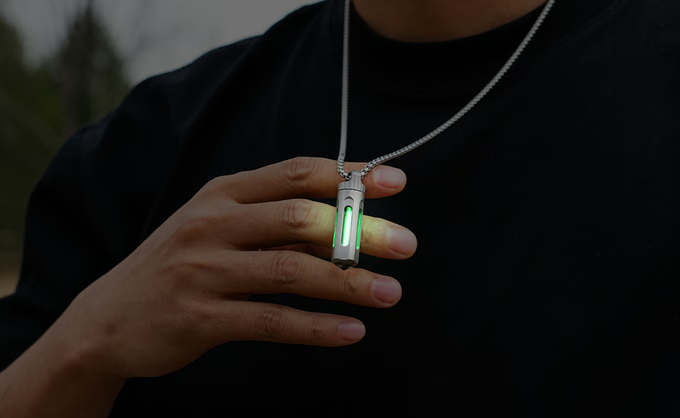
The shell comes in two finishes. Add-ons include a quick-release key ring and a stainless steel necklace, and the campaign shows the fob living happily on a backpack, a camera bag, a tent zipper, and a dog collar.
Why we like it
We spend a lot of time with objects that ask something of us. Charge me, update me, replace me. The NoxTi asks nothing at all, and there is a small, real pleasure in that. It belongs to a lineage of humble, well-made pocket things we keep returning to, like the reimagined Korean gat lamp or those improbable T-Rex bone tumblers: objects that take one idea seriously and execute it with care. This one takes the idea that a light should just be there, and it will be, for a quarter of a century.
The Kickstarter campaign has ended, but you can follow Xedge on Kickstarter for the next run. For more small, considered objects, browse our Design pillar.

