

A wearable device called Nura just won the 2026 Rimowa Design Prize. It reads sign language and speaks it aloud.
We’ve been thinking about that sentence since we first encountered this project. The simplicity of what it describes.
The complexity of what it took to get there.

Worn at the wrist, Nura uses EMG sensors to detect muscle activity in the forearm as the wearer signs. That movement becomes spoken words.
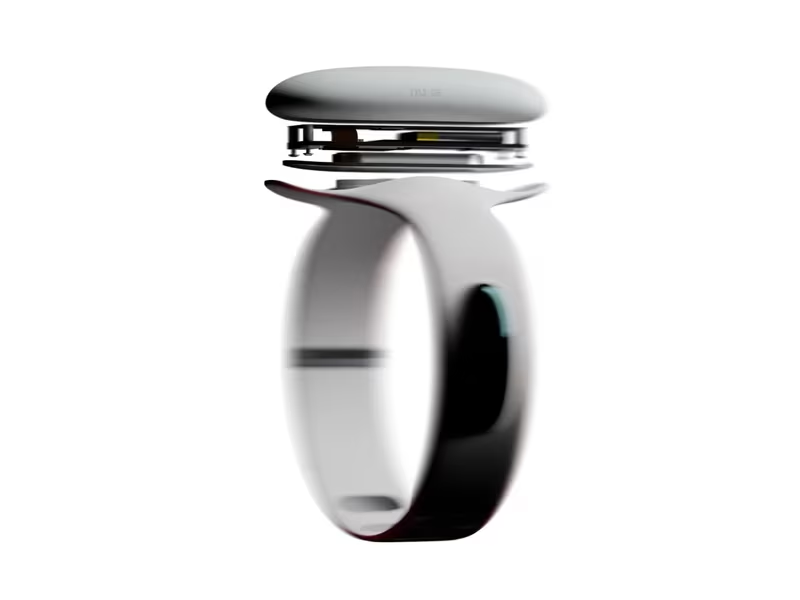
An integrated camera reads facial expressions too, catching the nuance that hands alone don’t carry. For the person on the other end of the conversation, speech gets transcribed into readable text simultaneously.

Not an app or a workaround. A conversation.
Designers Samuel Nagel and Paul Feiler made another choice worth noticing: they refused to let it look like a medical device. Assistive technology has spent decades apologizing for itself aesthetically. Nura doesn’t. The form is fluid, pulled from the geometry of manta rays. It has the quiet confidence of something you’d choose to wear regardless.
That distinction matters more than it might seem. Objects that feel good to wear get worn. Objects that feel clinical get left on the nightstand.

The pair received €20,000 at the ceremony in Berlin’s Kulturforum, developed under the mentorship of Siemens Healthineers industrial design head Tim Richter.
A Special Mention went to Niklas Henning for Paludi Harvester, a reed-farming system designed for peatland restoration that is methodical and considered in its own quieter way.

Now in its fourth year, the Rimowa Design Prize pairs students from across 40+ German universities with working designers. Mentors this edition included Konstantin Grcic, Farah Ebrahimi, Hanne Willmann, and Matylda Krzykowski.
Nura is the rare project that makes you feel the weight of a problem you hadn’t thought enough about.


Discover more from Moss and Fog
Subscribe to get the latest posts sent to your email.

