

Most outdoor play gear has a fairly short useful life. A toddler swing gets outgrown by age four. A sandpit loses its appeal once a child can read. Even a bike eventually sits unused in the shed once the next size up arrives. Climbing frames, though, seem to break that pattern. Kids return to them year after year, and the equipment keeps earning its keep across a surprisingly long stretch of childhood.
So what’s going on? Why does a relatively simple structure of bars and rungs hold a child’s attention when so many other backyard purchases end up gathering cobwebs?

What does hanging from a bar actually do for a child?
The benefits run deeper than the obvious upper-body workout. When a child grips a rung and lifts their feet off the ground, the shoulder girdle takes a load that almost nothing else in modern childhood replicates. School chairs, tablets, scooter handles, prams, none of it asks the shoulders to bear weight overhead. Climbing does. Hanging does. Brachiating from rung to rung does it even better, because rhythm and timing get folded in.
Paediatric occupational therapists have been quietly recommending hanging and climbing for years as a way to support core strength and grip development, alongside what they call proprioception, which is essentially a child’s sense of where their body is in space. Children who climb regularly tend to write more neatly and sit better at desks. They also fall over less. None of that is marketing fluff. It’s what happens when a young nervous system gets fed the kind of input it was built to process.
Why does the equipment hold up across so many years?
A well-designed climbing frame scales with the child rather than against them. A three-year-old uses the lower rungs as something to pull up on. A six-year-old works on hand-over-hand traverses. A ten-year-old starts skipping rungs, attempting bar muscle-ups, hanging upside down by the knees, dropping into landings. The same piece of equipment supports all of that without modification.
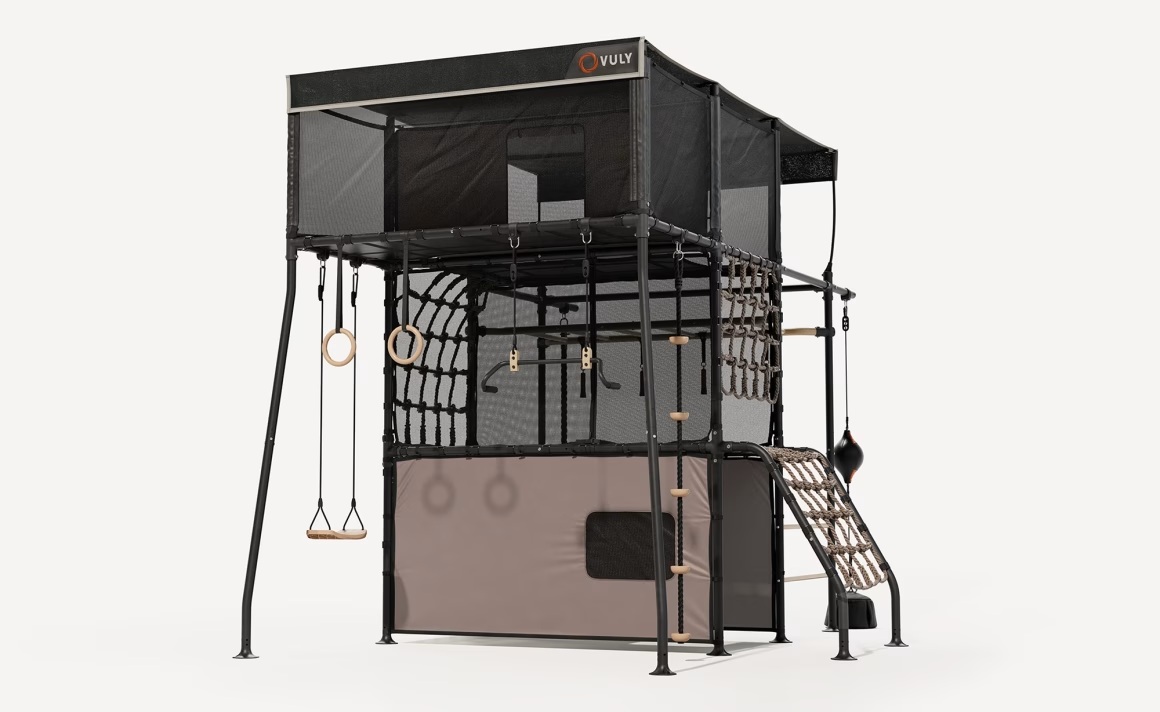
A set like the Vuly Monkey bars range pushes that longevity further with modular accessories. Trapeze bars, gym rings, climbing ropes and swings clip on and come off as kids’ interests shift. The frame itself uses powder-coated steel built to handle Australian weather, so it doesn’t quietly rust into oblivion after a couple of seasons in the yard.
That modular thinking matters more than people realise on first glance. A frame locked into one configuration becomes scrap metal when a six-year-old turns nine. One that adapts keeps pulling kids back outside.
Aren’t there safety concerns?
Children fall off monkey bars. They also fall off bikes and trampolines, and off the back of the couch when no one’s watching. The risk that matters isn’t whether a child might come off the bars, it’s whether the equipment has been engineered to soften the consequences when they do.
Modern climbing frames have moved a long way from the rusting schoolyard relics that some parents remember. Quality sets use rounded fittings and child-scaled rung spacing, with soft impact zones underneath. Surface matters too. Bark, rubber matting, playground-grade sand, or even thick lawn sit beneath the frame far more forgivingly than concrete or hard-packed dirt. Set up properly, a backyard climbing frame is no riskier than most of the other things kids do for fun on a Saturday morning.

How much space does a set really need?
Less than most parents assume. A small frame fits comfortably into a courtyard or a townhouse backyard with a clear fall zone of roughly a metre and a half on each side. Larger configurations need more room, but the modular ranges let buyers size the footprint to the yard rather than the other way round.
For families weighing up whether a set will fit, measuring the available patch of grass and adding the fall zone gives a realistic picture quickly. Most are surprised to find they have more room than they thought.
Will kids really keep using it, or get bored after a fortnight?
Some days, yes, the bars will sit empty while the kids are glued to a screen. No piece of outdoor equipment outcompetes a brand-new video game on the day it arrives. But boredom isn’t quite the right yardstick.
The better question is whether the frame gets pulled into regular use across a year, across several years, across the rotating cast of friends who come over after school. On that measure, climbing equipment performs unusually well. It’s social. Two kids on a set of bars invent races, obstacle challenges, hanging contests, ninja runs. It’s physical without feeling like a chore. It’s available the second a child steps outside. No setup, no batteries, no instructions, no parental supervision beyond a glance through the kitchen window.
Strength gains add their own pull. The bars a child couldn’t quite manage in March become conquerable by July, and that visible progress keeps them coming back to try the next harder thing.

Why are climbing frames quietly winning the backyard?
Pulling all of that together gives a fair picture of why so many families end up putting one in. The equipment matches the way children’s bodies are built to move. It develops strength and coordination that flows back into school, sport, and everyday physical confidence. It scales across roughly a decade of childhood. It encourages outdoor, screen-free, self-directed, unstructured play of the kind that’s been disappearing from family life for two decades.
Climbing frames also do something subtler that’s worth naming. They give kids a small, achievable challenge sitting in their own backyard, every single day. The first traverse across the bars without dropping. The first time skipping a rung. The first pull-up. The first time hanging upside down without panicking. Those moments matter. They build the kind of quiet confidence that comes from doing something hard with your own body and finding out you can.
A trampoline gets used. A swing gets used. A climbing frame, properly chosen and well placed, becomes part of the rhythm of a childhood. For a backyard purchase that has to justify its footprint and its price tag across many years, climbing equipment is one of the few that quietly keeps doing the job.
Discover more from Moss and Fog
Subscribe to get the latest posts sent to your email.


