Rising beside a tropical wetland in Haikou, China, the new Hainan Science Museum looks less like a building and more like a cloud suspended above the landscape.
Designed by MAD Architects, the 46,500-square-meter structure takes inspiration from the invisible air currents that form clouds, resulting in a fluid, silver form that appears to hover over reflecting pools.
Its seamless exterior is made up of 843 uniquely shaped panels, creating a sculptural shell that feels both futuristic and organic.
Inside, visitors follow a continuous spiral path through exhibitions on space, oceans, ecosystems, and technology, with a central skylight flooding the interior with natural light.
“Its seamless exterior is made up of 843 uniquely shaped panels, creating a sculptural shell that feels both futuristic and organic. “
Rather than dividing exhibits into separate rooms, the museum encourages exploration through a single flowing journey.
Depending on where visitors begin, the experience unfolds either from earth to sky or from cosmos to coast.
Alongside galleries, the museum includes a planetarium, giant-screen theater, and outdoor learning spaces, making it one of China’s most ambitious science destinations.
Like much of MAD’s work, the project blends architecture, landscape, and storytelling into something that feels both imaginative and deeply connected to its surroundings.
Almost like Dwell’s version of a stylish beach bungalow on Alderaan from Star Wars, these architectural renderings show us fascinating curved forms and stylistic choices that feel otherworldly.
Created by Spanish digital artist Carlos Antón Varó , the series is called ArchGanics is described by the artist as “Idealized places where the mind would love to stay.”
That feels appropriate, with unique built-in planters, oval skylights to the sky, and a sense of calm.
Wild, Growing Landmark Concept Features Living Rocks
MVRDV wants to stack a mountain of living, breathing rock formations on Rotterdam’s waterfront. We’re obsessed.
Imagine looking up at a mountain of moss-draped rocks, stacked and interlocked, with greenery spilling out of every crevice, and then walking inside through what looks like the mouth of an enormous turtle.
That’s Rotterdam ROCKS!, MVRDV’s proposal for the city’s new Shift Landmark, and the most delightfully unhinged piece of architecture we’ve seen pitched in a long time.
MVRDV, based in Rotterdam, fittingly, describe it as “rocks that breathe.” Massive sculptural volumes broken apart and piled high, with air, light, and vegetation threading through every gap.
The mass is inhabited. The crevices are the point. Their team includes Joris Laarman Lab, pioneers of 3D printing for urban greening, which hints that this isn’t just a building that looks like nature, it’s one actively exploring new ways of fabricating and growing the city at the same time.
Inside: a 10,000 m² immersive experience dedicated to circular living, plus a hotel, conference centre, and sustainable food court, all within a €240 million, 30,000 m² landmark planned for Rotterdam’s emerging Waterkant waterfront district.
Rotterdam has always said yes to the audacious. The Erasmus Bridge, the Market Hall, the cube houses. Rotterdam ROCKS! fits right in. The competition winner is announced this spring. Read more on DesignBoom.
Sustainability in architecture isn’t just a trend—it’s a movement reshaping the way we design and build spaces. As architects and designers, we’re now more conscious than ever about the environmental impact of our projects. Creating spaces that are not only functional and beautiful but also sustainable is essential. One of the most powerful tools helping us achieve these goals is Building Information Modeling (BIM), and specifically, BIM electrical modeling.
BIM is more than just a digital blueprint—it’s a system that allows for collaboration, accuracy, and efficiency, all key factors in reducing environmental footprints. In the world of green building projects, BIM electrical modeling is becoming an indispensable tool. It ensures that electrical systems are optimized for energy efficiency, reducing waste and contributing to the overall sustainability of a building. In this article, we’ll explore how BIM electrical modeling powers green building projects and why it is essential for creating artful, sustainable spaces.
The Green Building Movement: What Does It Mean?
Before diving into the details of BIM electrical modeling, it’s important to understand what green building is all about.
What are Green Building Projects?
Green building refers to the practice of designing, constructing, and operating buildings in a way that is environmentally responsible and resource-efficient. This includes using sustainable materials, reducing energy consumption, conserving water, and minimizing waste. The goal is to create spaces that are not only energy-efficient but also improve the well-being of their inhabitants.
Why Now?
The push for sustainable architecture is driven by a growing awareness of climate change, resource depletion, and the negative impact traditional construction methods have on the environment. With the building sector contributing significantly to global emissions, it has become increasingly vital to find ways to reduce these effects. Green buildings represent a key part of this solution, offering a way to build smarter, more sustainably.
BIM Electrical Modeling: A Game-Changer for Sustainable Designs
BIM electrical modeling is a crucial technology that’s revolutionizing how electrical systems are designed, installed, and maintained in green building projects. By using digital models, BIM allows architects, engineers, and contractors to collaborate more effectively and ensure that all aspects of the electrical systems are optimized for efficiency.
Enhanced Design Accuracy
One of the most significant benefits of BIM electrical modeling is its ability to provide accurate, detailed designs. Traditional methods of designing electrical systems often result in miscalculations, material waste, and costly errors. BIM eliminates these problems by providing precise measurements and real-time data, ensuring that the correct amount of materials is used for each project. This reduction in waste contributes directly to the sustainability of the project.
Energy-Efficiency Improvements
BIM electrical modeling also plays a vital role in optimizing energy efficiency. Through detailed simulations, engineers can analyze how electrical systems impact energy consumption and make adjustments to maximize efficiency. Whether it’s optimizing lighting systems or adjusting HVAC designs, BIM ensures that electrical systems are as energy-efficient as possible, leading to lower energy bills and a reduced environmental footprint.
Collaboration Across Teams
One of the key strengths of BIM is that it allows for seamless collaboration between all parties involved in a building project. Architects, engineers, contractors, and electrical specialists can all work on the same digital model, ensuring that their designs integrate smoothly. This collaborative approach helps identify potential problems early in the design process and ensures that every system is in harmony with the others, contributing to a more sustainable and efficient building.
The Benefits of BIM Electrical for Green Building Projects
BIM electrical modeling offers a wide range of benefits for green building projects. Below, we explore the specific advantages that BIM brings to the table when it comes to sustainability.
Reduced Material Waste
In construction, waste is an inevitable byproduct, but with BIM electrical modeling, we can significantly minimize it. BIM allows for precise calculations of material quantities, ensuring that only the necessary amount of materials is purchased and used. This means less excess material is left over at the end of the project, reducing the amount of waste that ends up in landfills.
Improved Energy Efficiency
Electrical systems play a huge role in a building’s overall energy consumption. With BIM electrical modeling, the design of electrical systems is optimized for maximum energy efficiency. For example, lighting, heating, and cooling systems can be designed to work together harmoniously, ensuring that energy use is minimized throughout the building’s lifecycle. This contributes to the building’s sustainability and reduces operational costs for the owner.
Streamlined Project Timeline
Sustainability doesn’t just mean reducing waste—it also means reducing time. The efficiency gained from using BIM helps streamline the entire construction process. With accurate electrical designs and the ability to simulate real-world conditions before construction even begins, the project timeline is shortened. This reduces the environmental impact of the construction process itself, including emissions from equipment, transportation, and other logistical aspects.
Sustainability Compliance
As the demand for green buildings rises, so do the standards and certifications for sustainability. BIM electrical modeling can help ensure that green building projects meet the necessary standards, such as LEED or BREEAM certification. These certifications require a high level of energy efficiency and sustainability, and BIM helps meet these requirements by providing detailed, accurate data on every aspect of the building’s electrical systems.
Real-Life Applications: BIM Electrical in Green Building Projects
To better understand how BIM electrical modeling works in practice, let’s look at some real-life examples of its application in green building projects.
Case Study 1: The Bullitt Center, Seattle
The Bullitt Center is one of the greenest commercial buildings in the world. It uses a range of sustainable technologies, including solar panels, rainwater harvesting, and energy-efficient HVAC systems. BIM electrical modeling played a crucial role in the building’s design, ensuring that all electrical systems were optimized for maximum energy efficiency. By using BIM, the team was able to reduce waste, lower energy consumption, and meet the stringent standards required for the building to achieve its LEED Platinum certification.
Case Study 2: The Edge, Amsterdam
The Edge in Amsterdam is another example of a sustainable building that relied heavily on BIM electrical modeling. The building’s electrical systems were designed to be as energy-efficient as possible, with advanced sensors controlling everything from lighting to temperature. BIM allowed the design team to simulate how these systems would work together and make adjustments before construction began. As a result, the building is now one of the most sustainable office buildings in the world, with a near-zero energy consumption rate.
Lessons Learned
These projects show how BIM electrical modeling can lead to greater sustainability in architecture. Not only does it ensure that buildings meet green certification standards, but it also results in significant cost savings and energy efficiency over the building’s lifespan.
Overcoming Challenges: Is BIM Electrical Accessible for All Projects?
Despite its many advantages, implementing BIM electrical modeling in green building projects does come with some challenges.
Cost vs. Benefit
One of the main obstacles to adopting BIM electrical modeling is the initial cost. The software and training required to implement BIM can be expensive, especially for smaller companies or projects with tight budgets. However, the long-term benefits—such as reduced material waste, lower energy costs, and faster construction timelines—often outweigh the initial investment.
Training and Expertise
BIM requires a certain level of expertise to be used effectively. Architects, engineers, and contractors must be trained in the software and familiar with its capabilities. This can be a barrier for smaller firms or those new to the technology. However, as BIM becomes more mainstream, training programs are becoming more widely available, and the software is evolving to be more user-friendly.
Access to Technology
While BIM is becoming more accessible, there are still technological barriers, especially for smaller projects. High-end BIM software requires powerful computers and extensive data storage capabilities, which might not be available to everyone. However, with advancements in cloud computing and the increasing availability of affordable software options, this barrier is slowly being overcome.
Looking Ahead: The Future of BIM Electrical and Sustainable Architecture
The future of BIM electrical modeling is bright. As sustainability becomes an even greater priority in architecture, BIM will continue to play an essential role in ensuring that electrical systems are optimized for energy efficiency and minimal environmental impact.
Emerging technologies, such as artificial intelligence and machine learning, are being integrated with BIM to make electrical modeling even more precise and efficient. In the future, BIM electrical systems may automatically adjust based on real-time data, further enhancing energy efficiency and sustainability.
As the demand for sustainable buildings grows, BIM electrical modeling will be at the forefront of this shift, driving the next generation of green buildings and making our built environment more sustainable for future generations.
In conclusion, BIM electrical modeling is a critical tool for creating sustainable, energy-efficient buildings. By reducing waste, improving energy use, and enabling seamless collaboration, it plays a key role in green building projects. With its growing adoption and the continued evolution of technology, BIM will undoubtedly remain a cornerstone of sustainable architecture for years to come.
Heatherwick Studio has shared a fresh vision for the Daegyo Apartments in Yeouido, Seoul.
The plan would replace a 1975-era complex with four new residential towers along the Han River, shaped with soft, rolling rooflines that nod to the mountains around the city.
Instead of the usual straight, repeatable high rise look, the proposal leans into curves and texture, aiming for something that feels more warm and lived-in.
The redevelopment would grow the site from 576 homes to about 900, with design input gathered from hundreds of resident union members.
At street level, the idea is to make the place calmer and more walkable. Portions of the site edge are lifted to help block traffic and create sheltered paths, plus sunken courtyards that feel like little breaks from the city.
A generous ground floor is planned to be open to residents and the public, with community facilities like play areas and welfare services woven in.
More Thomas Heatherwick and Heatherwick Studio on Moss and Fog
Up in the mountains near Stepantsminda, a tiny new refuge called AltiHut is taking the idea of a “cabin with a view” and treating it with a brutalist, yet warm aesthetic.
Designed by STIPFOLD, the concept sits at 3,014 meters above sea level and aims to prove that high altitude hospitality does not have to be heavy-handed.
The project leans into restraint: compact spaces for small groups, a simple layout, and a lofted sleeping area that faces the horizon.
What’s most charming is how the design tries to disappear. A continuous fiber-concrete shell is shaped to feel like it belongs there, like a boulder that decided to become shelter.
” THE RESULT IS A SPACE THAT FADES INTO ITS SURROUNDINGS, OFFERING A RARE KIND OF SILENCE AND CLARITY, WHERE ARCHITECTURE SERVES ONLY TO FRAME THE PRESENCE OF THE MOUNTAIN ITSELF. “
Inside, warm wood keeps things grounded, and a big glass opening turns the landscape into the main feature, so the room feels more like a frame than a statement.
Even the logistics are part of the story. The article notes that elements are delivered by helicopter and the site is solar-powered, which is a nice reminder that building responsibly at this elevation takes both planning and humility.
In a world full of mountain cabins that try too hard, AltiHut feels calmer than that. It is not shouting “look at me.” It is quietly saying, “look out there.”
Tucked on Graefestraße 7 in Berlin Germany, it feels pared back on purpose, a room built for slowness and the small ceremony of bread. But it’s not just bread. The loaves are displayed in a beautifully artful manner.
Studio Michael Burman keeps the space quiet but never plain. A reclaimed millstone, cut into three smooth, wave-like pieces, becomes the counter, part relic, part altar.
Douglas fir warms the benches and shelving, while brushed stainless ledges hold loaves like still lifes. Handmade washi paper wraps the walls in a soft grid, and paper pendants float overhead, turning daylight into something gentler.
And yes, the pendant is reminiscent of a loaf of bread itself.
Keit is led by Thanos Petalotis and Kolja Orzeszko, former Adidas creatives who traded brand strategy for sourdough and a more literal kind of craft.
In this place, bread is not hidden behind glass. It sits out in the open, all crust and texture, made to be looked at before it is broken and shared.
Perched over the water of Crystal Lake, New York, this slim pavilion serves as a place for yoga classes, meditation, and group therapy.
Designed by Marc Thorpe, the structure is anchored to the lakebed by a single concrete pier, which helps gives the illusion of the entire structure floating atop the water.
The clean lines and cantilevered roof make for beautiful reflections on the water, and the pavilion’s interior lighting add to the sense of wonder and magic that the structure provides.
Located in the West Catskills, we love the way the structure accentuates the natural beauty of this upstate retreat.
The softly lit pavilion stands gracefully on the foggy lake.
The elegant single pier anchors the structure, and looks like it’s floating.
“The 497-acre forest features a 32-acre man-made lake, which would be the home of the Crystal Lake Pavillion. Thorpe’s design, shown above in renders from Truetopia, and only accessible by boat, would feature a timber frame and standing seam steel roof, bolstered by light steel connections.
All four walls are built from large glass panes, a transparent design that intentionally blurs the line between structure and nature. A single, solid concrete pier below the structure holds it in place, and, from a distance, makes the structure look as if it’s floating on air, “presenting an optical illusion of weightlessness,” Thorpe says.
Every so often, there’s a home design that just ‘feels’ right. From the proportions to the materials and the use of space, certain homes just strike the right balance.
In this case, it happens to take the shape of a large and luxurious modernist beauty in Pacific Palisades, California.
This complete renovation of an existing home is nestled in the hills outside Los Angeles, and luckily were spared the recent wildfires that demolished so many residences.
Not only does this tick the boxes visually for us, but it also wins points by updating an earlier design from legendary designer Richard Neutra. The designers took the existing Neutra design, and thoroughly overhauled it to more genuinely reflect the home’s potential.
We love this balance of modern and friendly, with a great use of materials that feel warm, and full of texture. Neutra was a pioneer in the Mid-century era, and we think he’d be thrilled by the overall look and feel of the Rustic Canyon residence.
The design work is by Assembledge+ and Jamie Bush + Co. Click through the gallery below to see more of this home’s impressive detail.
“The current design of Rustic Canyon Residence seeks to restore this lost architectural unity, paying homage to its historical roots while integrating the principles of organic modernism,” the team said.
“This project reflects the core of our design philosophy – creating warm, modern spaces that celebrate natural materials, craftsmanship, quality, and a sense of humanity,” principal and founder Jamie Bush said.
James Casebere’s Hauntingly Beautiful Miniature Worlds
At first glance, James Casebere’s photographs feel eerily real and vast. Empty spaces drenched in moody light. But look closer, and a surreal truth emerges: these aren’t real buildings at all, but meticulously crafted miniature models, built by Casebere himself.
His work plays with perception, creating stark, haunting landscapes where light and shadow tell their own stories. Flooded hallways, barren prisons, and desolate architectural spaces take on an almost dreamlike quality, pulling viewers into a world that feels both familiar and unsettling.
By stripping away detail, Casebere highlights the essence of place—emotion, atmosphere, and memory. His images linger in the mind, like a half-remembered dream or a glimpse into a future both beautiful and ominous.
A master of illusion and craft, Casebere reminds us that reality is often what we choose to see.
Blue House on Water 2 (2018)Dark Cube 2019House of Mirrors 2019Yellow House on Water, 2018Balconies, 2024Stairs, 2024Blue House on Water, 2018Bright Yellow House on Water, 2018Orange Guesthouse 2018School, 2024Beach Huts (Night), 2024Tan House on stilts, 2018Patio with Blue Sky, 2024
There’s a forceful yet elegant modernism to the Oruc House, a home designed for Mineral del Monte, Mexico.
Designed by Ukrainian team Anastasiia Sholopova and Yuriy Bobak, we see a tough exterior of concrete and glass, with a cantilevered main level jutting out of the hillside.
A steel slab deck extends from the glass, with a covered concrete roofline that has custom cutouts for the tall fir trees that grow on the property.
A strong juxtaposition to the natural setting, the home design nevertheless feels bold and appropriate for the location.
We can imagine feeling at one with the quiet forest while perched on the hillside.
Still in visualization stage, the home is an eye-catching layout and design that understands place, scale, and use of minimalist materials. See more of the partners work on Behance.
Heatherwick Studio’s latest project in Xi’an, China, features a stunning tree-like park at its heart, blending nature with urban life.
A series of elevated pathways and shaded walkways create vibrant spaces for gathering, reimagining public areas as hubs of connection and relaxation.
Thomas Heatherwick always brings a unique sense of the unexpected to his work, and this project is no exception. The ‘tree’ features dramatic angles and elevation, in an overall form that is highly distinctive and memorable.
The district is designed for sustainability, with green roofs, natural ventilation, and energy-efficient systems seamlessly integrated into its architecture. We like the way the surrounding plazas and promenades invite exploration, fostering a pedestrian-friendly environment.
By combining Xi’an’s rich cultural heritage with bold, forward-thinking design, Heatherwick Studio has created a vibrant urban destination that bridges tradition and innovation.
Heatherwick Studio has masterfully combined elements of Xi’an’s rich cultural heritage with a forward-thinking design approach.
The result is a dynamic and vibrant urban destination that honors the past while looking toward a more sustainable and innovative future for the city.
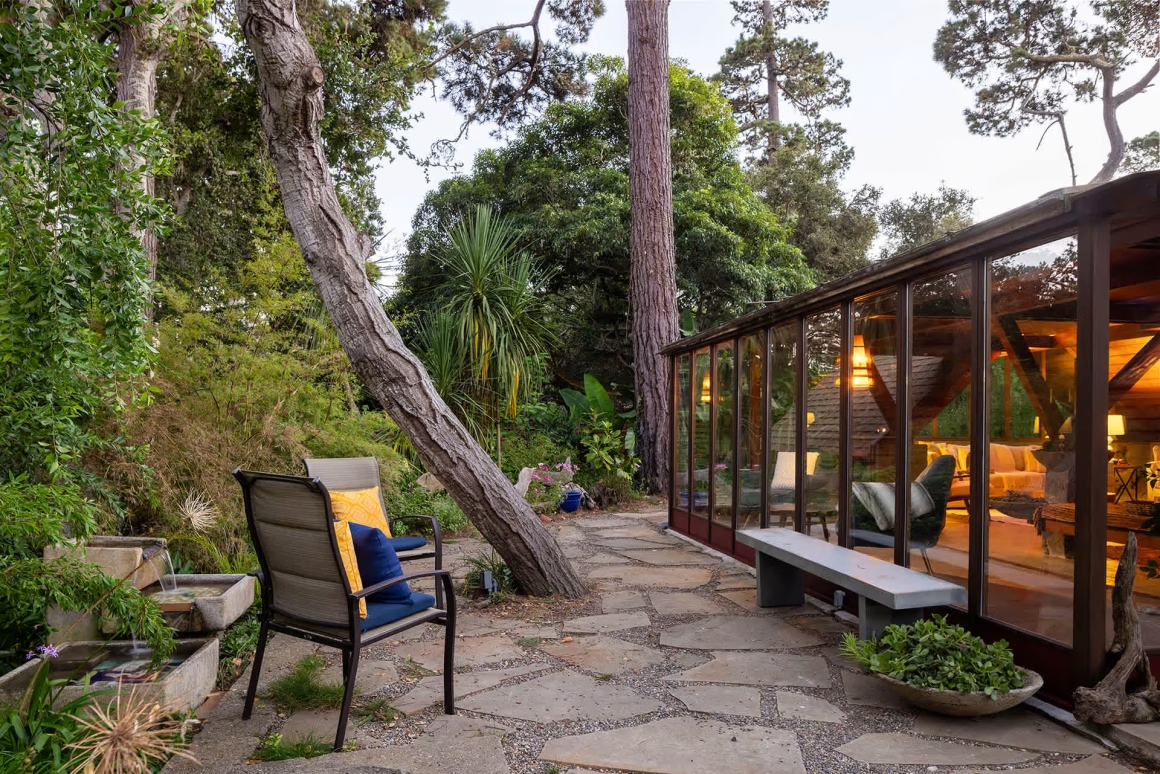
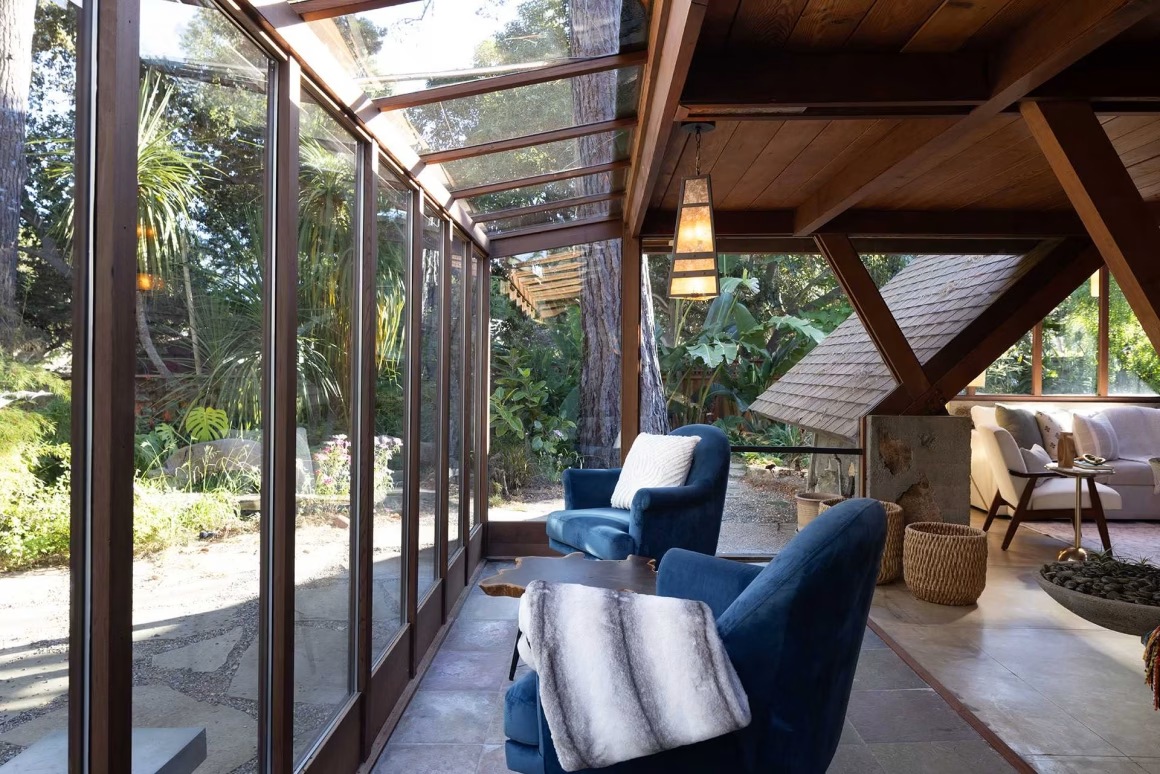
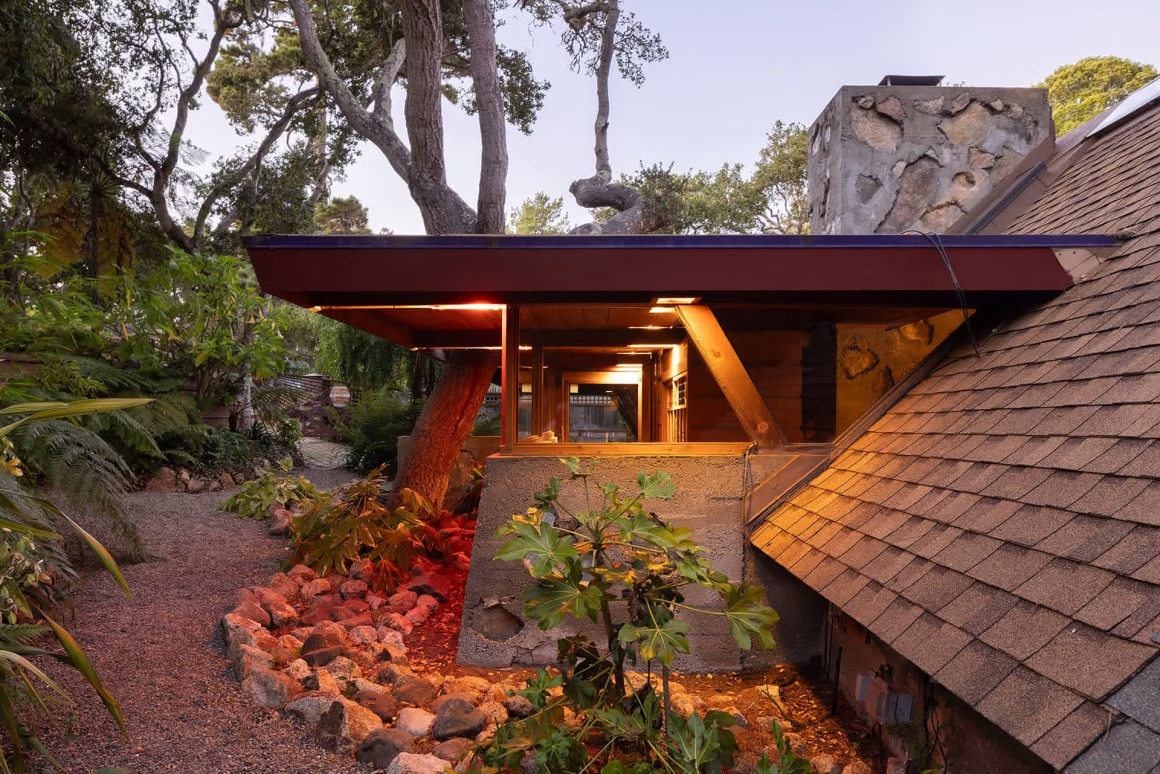
The Banyan House, designed by Frank Lloyd Wright apprentice Mark Mills, is a mid-century treasure nestled in Carmel-by-the-Sea. It’s also for sale, listed at $2,795,000.
The home fits into the Californian landscape beautifully. Mills embraced Wright’s principles of organic architecture, crafting a home that harmonizes effortlessly with its natural surroundings.
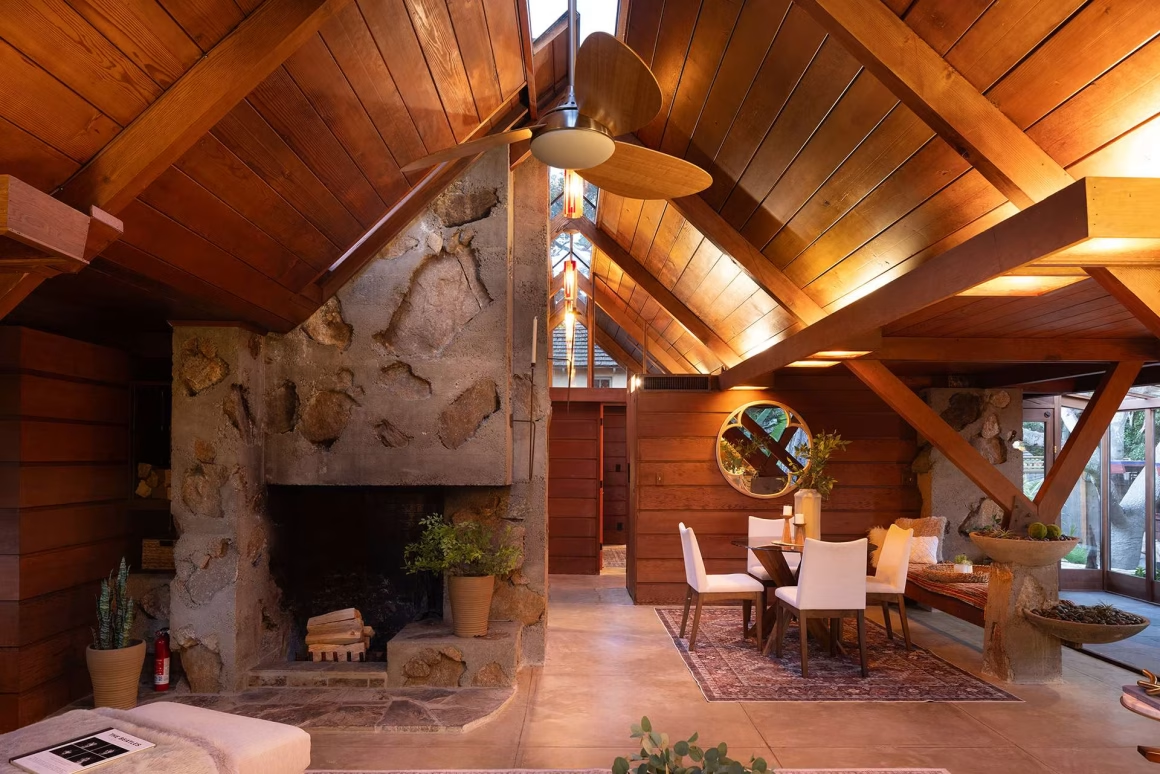
The design incorporates local materials, including original redwood beams, siding, and Mills’ distinctive “desert masonry” concrete, creating a textural interplay that grounds the home in its environment.
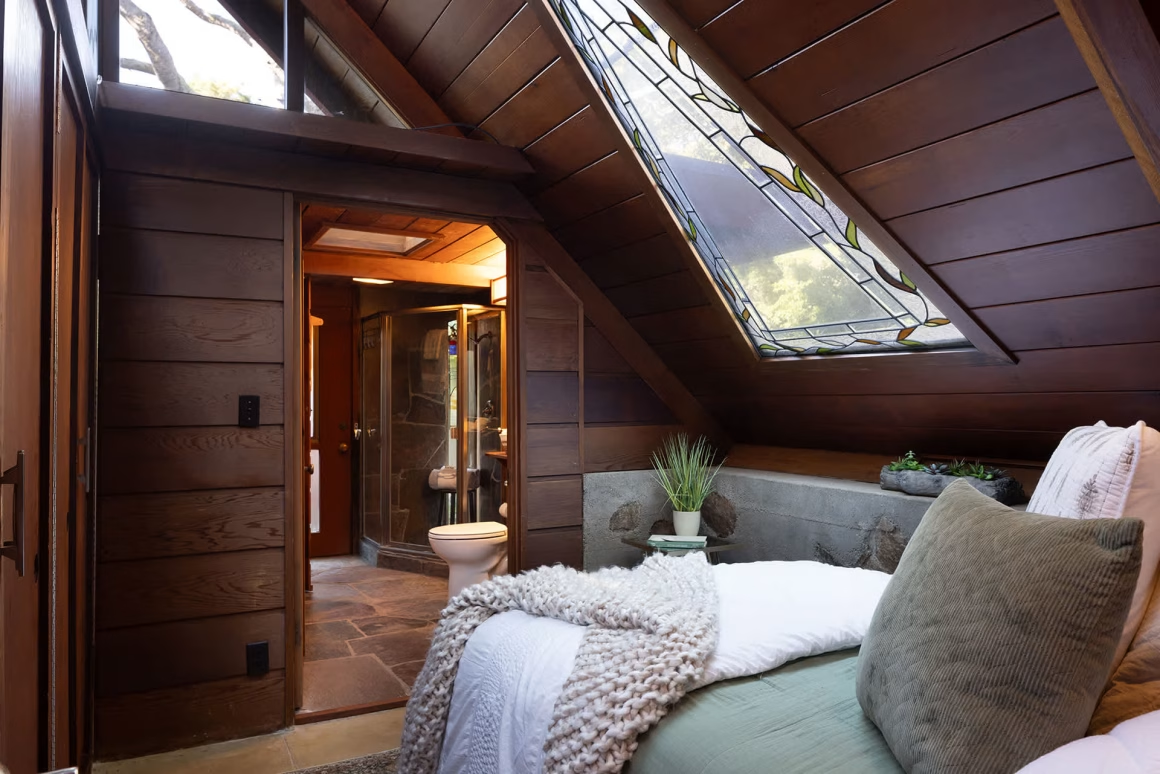
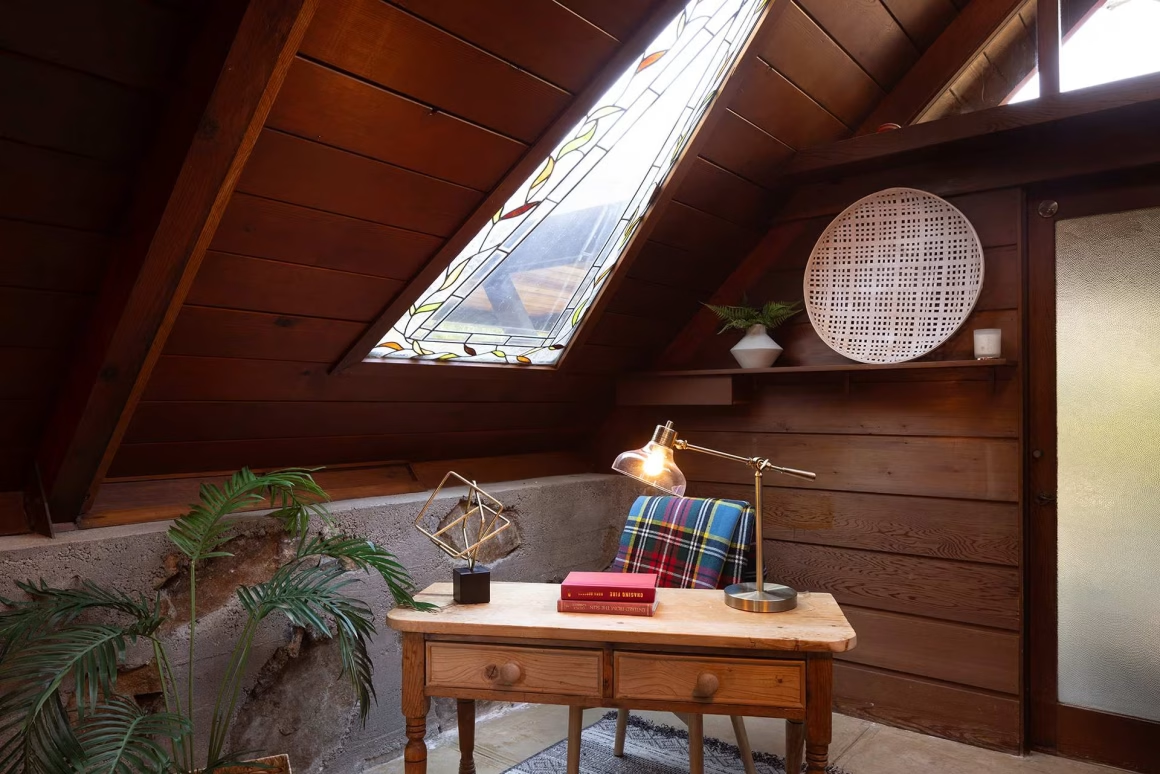
Natural light pours into the interiors through expansive windows, blurring the boundaries between indoors and out, while stained glass details in more intimate spaces bring a touch of artistry and tranquility.
The result is a home that feels both vibrant and serene, designed to adapt to the rhythms of its surroundings.
Just steps from downtown Carmel, the property balances retreat and accessibility. It features a sunlit solarium, a separate studio, and a striking custom iron gate that welcomes you to its lush, manicured grounds. The design and layout would make Frank Lloyd Wright proud.
Custom stained glass adorns the bedrooms, and brings a unique flow of light into the spaces.
A unique combination of architecture and nature, the Banyan House is a tribute to mid-century design and the vision of Mark Mills.
I took these pictures in Switzerland, the Canary Islands, Austria and Spain. My goal as a photo artist is to find angles that reveal unexpected beauty in the mix of geometrical shapes and colors.
The simplicity invites you to eventually almost forget, that you are looking at actual buildings. This is when the magic happens and you sink into the picture and forget about everything around.
The Sydney Opera House is already one of the most photographed buildings on earth, which makes it a bold choice as a projection surface. Every year during Vivid Sydney, artists use the Opera House’s curved shells as a canvas for large-scale light installations. The results range from subtle to completely overwhelming.
The Sydney Opera House is one of the most famous buildings in the world, and right now, it’s being digitally skinned like a psychedelic chameleon. Part of the Vivid Sydney, artists are projecting amazing things on the sails of the building. Love it.




 The Sydney Opera House is one of the most famous buildings in the world, and right now, it’s being digitally skinned like a psychedelic chameleon. Part of the


