Apple’s WWDC opening animations are not supposed to be the point, and yet every year designers end up dissecting them anyway. The 2013 version in particular shows what happens when a motion designer decides restraint is more interesting than spectacle. More negative space than movement. The kind of work that looks easy until you try to make something similar.
Apple held their 24th annual WWDC this week, and they opened the conference with a beautiful and spare animation. I’d love to know how to animate like this. Well done.
We remember our first cellphone purchased that had a camera, in 2002. It was heavily researched and nabbed at Best Buy the day it came out. It was a Nokia 3650, cutting edge at the time, with color screen, and (stunner!) a 0.3 Megapixel camera. 😆
The photos it took were horrendous, small, grainy, poor color, and bad resolution in even the best of light. Night photos were quite simply impossible.
Fast forward to 2020, and we’re on the 11th generation iPhone, with three cameras that work together, creating images so crisp, you’d swear they were taken on a big SLR camera rig.
Below are the winners of Apple’s Night mode photo challenge, where people from all over the world showcase what an un-retouched cell phone photo can look like.
The winning photos are beautiful captures of rural and urban life, all remarkable photos on their own, and even more so when you realize they’re captured on a thin slab of metal and glass in your pocket. What will phone photography hold in another 20 years?
Konstantin Chalabov (Moscow, Russia), iPhone 11 Pro
Andrei Manuilov (Moscow, Russia), iPhone 11 Pro Max
Mitsun Soni (Mumbai, Maharashtra, India), iPhone 11 Pro
Rubén P. Bescós (Pamplona, Navarra, Spain), iPhone 11 Pro Max
Rustam Shagimordanov (Moscow, Russia), iPhone 11
Yu “Eric” Zhang (Beijing, China), iPhone 11 Pro Max
Apple’s Chief Design Officer, Sir Jony Ive, has stepped down from his role at the tech giant, marking the end of an era of design-thinking, and cutting-edge industrial design.
In his 20+ year career at Apple, he pioneered and lead the design of some of the world’s most influential and transformative products. Working directly alongside the late Steve Jobs, Ive had a slew of huge breakout successes, from the original iMac, to the best selling product of all time, the iPhone.
We were suckers for his smooth product introduction videos, describing the design thinking and industrial processes, in his flawless British accent.
Leaving Apple to pursue his own company, entitled Loveform, Ive will continue to work with Apple on their design projects. Yet it’s impossible to deny that it’s the end of an era for the company that wanted us to Think Different.
The behemoth today is much more interested in selling you iCloud and Apple Music subscriptions, than continue to pioneer new consumer products, with industry leading design and attention to detail.
Below we take a look at several of the groundbreaking products that Jony Ive was responsible for the design of. We’ll be sad to see him leave the company, although his legacy is firmly intact, having pushed our collective tastes towards a more thoughtful, minimal, and well-crafted place. Thank you, Jony!
The original ‘jellybean’ iMac, which coincided with Steve Jobs return to the company.
The equally colorful iBook notebook.
The original iPod with scroll wheel and black and white screen. Remember this gem?
The “lampshade” iMac that introduced a flat-panel display.
The original iPhone, the product that would go on to make Apple the most valuable in the world, and sell hundreds of millions of copies.
The aluminum MacBook Pro, ushering in a new era of metal and glass design to Apple.
The original iPad, Steve Jobs’ last product introduction before his death, continued the clean minimal design.
iOS 7, the iPhone’s software platform, ushered in a new, flat design language, lead by Jony Ive, and showcasing his design flourishes.
The original Apple Watch, a classic design that would go on to become the most popular wearable in the world.
Apple Park, Jony Ive’s last ‘product’, their incredibly advanced and minimal headquarters in Cupertino, California.
Like it or not, the era of Augmented Reality is approaching. Companies are racing to create wearables and other technology that will augment your vision with helpful (and sometimes scary) information. The idea is that your glance at a store might pull up information about sales and store hours. Peeking at a food label might pull up recipes and additional nutrition facts. Widgets like weather, appointments, and messages might always be in your field of view. The possible applications are endless. Many of the concepts for these devices have been panned as unwieldy or just plain ugly. Google Glass, an ambitious early attempt, were seen as bulky, ugly, and an invasion of privacy, due to their always-on recording functionality.
Though Apple hasn’t announced details of their AR project, CEO Tim Cook expressed deep enthusiasm for the project. With the help of industrial designer Taeyeon Kim, we get a sense for what these glasses might look like. A stylish and realistic concept, these designs showcase circular frames with distinctive “Apple” touches, from their minimalist form, magnetic attachments, and the shades of rose gold that the company loves so much. Via YankoDesign
“I see AR as being profound,” Cook said on the company’s first quarter earnings call on Thursday. “AR has the ability to amplify human performance instead of isolating humans. So I am a huge, huge believer in AR. We put a lot of energy on AR. We’re moving very fast.”
In a 4-minute music video/commercial for the new Apple HomePod speaker, director Spike Jonze pushes the limits of visual space and dimension. Featuring musician and dancer FKA twigs and an exclusive music track by Anderson .Paak, the ad features a woman exhausted from her busy day in the city, escaping to the small confines of her apartment. After asking her speaker to “play something I would like”, she comes alive with the track, and finds that her apartment’s surfaces are entirely manipulatable, similar to the tesseract in the film Interstellar. The way the video changes from drab to surreal is surprising and timed well. The music track is catchy and very danceable, as FKA twigs. shows in a fun, visually compelling performance. It’s a great escapist premise commercial that delivers on creative visuals. Via AdWeek:
Quick Facts: Name: Apple Park. Location: One Apple Park Way, Cupertino, California. Architect: Foster + Partners (Norman Foster). Area: 2.8 million square feet. Employees: ~12,000. Opened: April 2017. Construction cost: Approximately $5 billion. Centerpiece: The Ring — a circular main building 1.6km in circumference. Also on campus: Steve Jobs Theater, 9,000 trees, a 100,000 sq ft fitness center, and underground R&D labs.
Steve Jobs spent some of his last working months personally overseeing the design of Apple Park. He died in October 2011. The campus opened in April 2017. What was completed is one of the most ambitious corporate headquarters ever built: a single circular building 1.6 kilometers in circumference, set inside 175 acres of landscaped grounds, housing 12,000 employees under one continuous roof of curved glass.
What Norman Foster Designed
Foster + Partners’ design centers on “The Ring” — a four-story circular structure with no straight lines and no conventional entrance. The building wraps around a central courtyard of gardens, orchards, and meadows. The exterior walls are almost entirely glass, using the largest curved glass panels ever manufactured at the time of construction. Natural ventilation handles the climate for nine months of the year without mechanical systems.
Steve Jobs Theater
The campus’s most architecturally dramatic building is the Steve Jobs Theater, a 1,000-seat underground auditorium whose only visible structure above ground is a cylindrical glass pavilion. The roof — a carbon fiber disc 20 meters in diameter — appears to float above the glass walls. It’s where Apple announces its major products, and it manages to feel appropriately monumental without being ostentatious.
The Environmental Ambition
Apple Park is powered by 100% renewable energy, drawing on 17 megawatts of rooftop solar — the largest onsite solar installation of any corporate campus in the world at opening. The 9,000 trees planted on the grounds include many native California species that were in danger of disappearing from the region. The landscape itself is designed to require minimal irrigation once established.
A Campus That Earns Its Ambition
Corporate campuses often promise more than they deliver architecturally. Apple Park is genuinely exceptional: a building that treats its scale as an opportunity rather than a challenge, that makes sustainability central rather than cosmetic, and that will likely still be considered one of the finest examples of 21st-century corporate architecture decades from now.
Apple is well known for powerful advertisement, and their new Earth- Shot on iPhone ad is no exception. Using Carl Sagan’s own words from his book: Pale Blue Dot: A Vision of the Human Future in Space, the ad showcases great photos and videos shot by users of iPhones. Sagan’s powerful words ring true in this simple yet moving advertisement.
“The Earth is a very small stage in a vast cosmic arena. In our obscurity, in all this vastness, there is no hint that help will come from elsewhere to save us from ourselves. The Earth is the only world known so far to harbor life. There is no where else, at least in the near future, to which our species could migrate. Like it or not, for the moment the Earth is where we make our stand. It underscores our responsibility to deal more kindly with one another and to preserve and cherish the only home we’ve ever known.”
The first shot fired in the smart watch war was either the Pebble or the pseudo-smart iPod Nano in a watch band. Since then, a number of companies have attempted some very interesting and lame entrants, few of which have caught on with any kind of vigor. Lately though, as rumors of a fully-fledged Apple iWatch heat up, the biggies of the tech world are starting to invest in their own ‘watches of the future.’ The latest, announced this week, is the Moto 360, utilizing the just-released Google Wear software. Unlike nearly all of the competition, the Moto 360 is elegant, thoughtful, and actually looks like a watch you want to strap on.
As a designer, I immediately gravitate toward the Moto 360’s form factor, which has been around for centuries, and looks classic on the wrist. Indeed, I imagine there are some designers at Apple this week that are pretty pissed that Motorola got here first. Understated, versus the chunky, often ghastly industrial design of those othersmart watches, the Moto 360 eschews things like cameras and visible sensors, which in 2014, takes some real restraint.
The watch is too new to be reviewed, but it relies heavily on Google Now, which is entirely voice-driven, similar to Siri. Part of me hates the idea of always barking commands at my wrist, but we’ll see how the watch operates, and how intuitive the software really is. I’m also very curious to know how a circular LCD is created. Nice work, Motorola. You deserve a slap on the wrist…
For all of the nature posts I do, I’m an unabashed tech geek as well. As a designer, I’m interested in aesthetics and function being married seamlessly. So far, there aren’t many details out about Apple’s forthcoming jump into the ‘wearable space’, but that hasn’t stopped designers from coming up with some interesting concepts. For the most part, the designs have a certain sleek, strappy, Nike Fuelband look to them. While this makes sense, it doesn’t match up perfectly with the rumored small screen sizes that Apple has been researching. When Samsung released their Galaxy Gear, it didn’t exactly set the world on fire. It’s somewhat handsome, but lacks a cohesive feel, and failed to connect with customers. Supposedly 30% of those who bought one at Best Buy returned the product, unsatisfied. In a post-Steve Jobs Apple, the company needs to dig deep before releasing something, and it sounds like that is the plan.
If they gathered collective brilliance, a device of supreme intelligence and elegance could usher in the next big wave of innovative products and technology. And while there is a contingent of anti-Apple folks out there, they remain one of the most innovative and polished companies in the world, from a product perspective. I’d be curious to see the iconic circle watch shape explored. it certainly has drawbacks from a display standpoint, but in terms of lasting design, something like this Braun classic is pretty damn timeless.
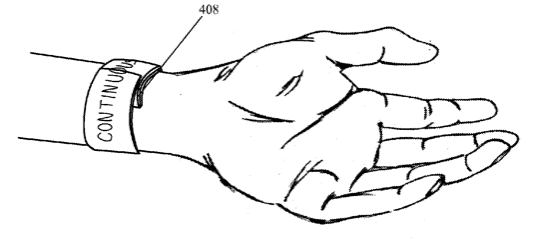
Apple’s own patent speaks to a ‘slap-bracelet’ type band with inherent flexibility to the whole device. Whether or not flexible OLED displays are able to come to market this soon remains to be seen.
For those of you with a bunch of cash in your wallet, and the need to stand out, ColorWare has some custom iPhone 5 treatments, and they look darn pretty cool. The Colorware iPhone 5 ($1,700) is now available. Using an online tool, you can choose a custom color for the 64GB, SIM unlocked phone’s body, top rear glass, bottom rear glass, Home button, and SIM tray. A wide variety of both solid, metallic, and pearlescent colors are available.
1986. A year after Steve Jobs was kicked out of his own company, and a year when Apple was still riding the wave of the original Macintosh. Perhaps to supplement their computer offerings, perhaps just because they could, Apple offered something called The Apple Collection. It was a full catalog of goods, from backpacks and cases to thermoses, clothing and even an Apple-branded windsurfer. The catalog stands out for its sheer 80s personality; those colors, those poses, that hair! But also for some of the rather handsome design that still looks good today. I mean, no one has use for a 5 1/4 ” floppy disk drive case anymore, but it still looks cool! Do any of you own any of these items? Probably pretty valuable collector’s items by now!
This is a very sad day. Really nothing more to say than that. For more of my thoughts on Steve Jobs life, check out my portfolio website, with a tribute to the guy who inspired so many of us.
Get ready to yell more. Thought you were annoyed by the glow of people texting in a darkened theater? Just wait for them audibly talking, shouting, whispering, yammering into their phones. It’s coming soon.
Apple’s just-announced iPhone 4S is coming loaded with Assistant, supposedly the world’s most advanced consumer artificial intelligence (AI). Supergeeks will cry foul that their Android phones have something similar, but we know Apple’s finesse and ability to make consumers swoon. And if Phil Schiller’s demonstration was any guide, it’s pretty damn amazing. I joke that the implementation of the feature may be a public annoyance, but there’s no doubt that I’m impressed.
Here are just a few quick examples from today’s announcement that portend the coming technology:
– “Wake me up tomorrow at 6am.” iPhone sets alarm and confirms.
– “How’s the NASDAQ doing today”. iPhone brings up stock chart.
– “Find me a Greek restaurant in Palo Alto.” iPhone brings up options.
– “Give me directions to Hoover Tower” iPhone brings up map and directions.
– Siri can read text messages aloud, check appointment calendar, and take down dictated response.
– “Remind me to call my wife when I leave work.” iPhone sets up a geofence to alert Scott when he leaves the campus.
– “Search Wikipedia for Neil Armstrong.” Info page pops up.
– “Define ‘mitosis’.” iPhone checks WolframAlpha. Same for currency conversions.
– Siri includes lists of example requests to help users learn.
We can all agree we are officially living in the future now, right? Geofences, Hal 9000 similarities, Right? This is getting pretty ridiculous.
Arriving in his trademark black turtleneck and jeans, Steve Jobs made a rare appearance at the Cupertino City Council yesterday to give an overview of Apple’s new headquarters, due to house up to 13,000 Apple employees in truly amazing style. Norman Foster is believed to be the lead architect on this project, with renderings showing a graceful curved circle building, one that sits on naturally landscaped ground.
Via MacRumors:
The facility will be 80% landscaping, with most of the parking underground, compared to 20% landscaping with all above ground parking currently. The current campus has 3,700 trees and Apple plans to increase that to more than 6,000 trees, including “some apricot orchards.”
Apple also plans to build its own energy generation facility using natural gas, with the electricity grid as a backup.
Steve explains:
It’s a pretty amazing building. It’s a little like a spaceship landed. It’s got this gorgeous courtyard in the middle… It’s a circle. It’s curved all the way around. If you build things, this is not the cheapest way to build something. There is not a straight piece of glass in this building. It’s all curved. We’ve used our experience making retail buildings all over the world now, and we know how to make the biggest pieces of glass in the world for architectural use. And, we want to make the glass specifically for this building here. We can make it curve all the way around the building… It’s pretty cool.
The building will be a significant piece of architecture when complete. As a strong believer in bold and beautiful actions, Apple comes through with a design that helps to elevate technology and space while retaining a sense of connection to the land.